
Wild Honeysuckle
Wild honeysuckle, which also has the ancient name of Woodbine, is found throughout Dormouse Wood.
It is a vigorous ciimber, often growing to over 7m (23 ft).
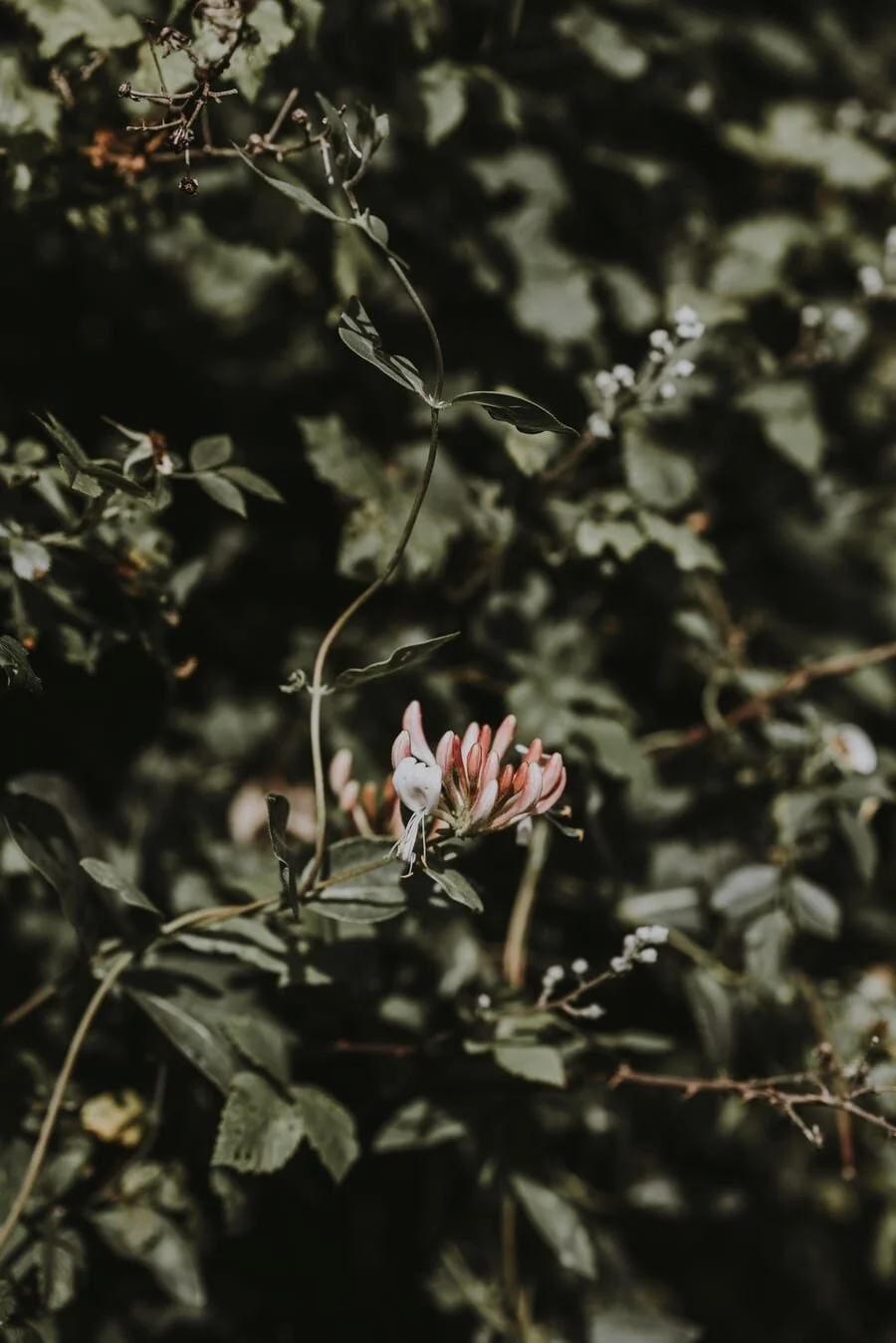
Delicate pink and white flowers provide food for bees, moths and dormice
Its wood takes the form of intricate twining vines which are red when young. These vary in thickness from tiny, delicate wisps, to pieces wide enough to make into beautiful walking sticks. In summer wild honeysuckle has sweet smelling tubular flowers which has the most wonderful perfume.
Honeysuckle climbs clockwise around the branches and stems of other plants, sometimes distorting them into amazing twisted shapes. Its grey-green, oval leaves appear from February and stay on the plant until autumn, or even over winter. In summer, white or yellow, red-flushed, tubular flowers appear in clusters; red berries ripen in autumn.
Honeysuckle is incredibly valuable to wildlife, supporting a number of species, many of which are rare - including dormice and butterflies, such as the White Admiral (which is in decline). Many creatures rely specifically on honeysuckle, and it is also prized by bees. Pollinating moths love the scent of honeysuckle at night, when it is strongest and birds, including thrushes, warblers and bullfinches, eat the berries in late summer and autumn. Dormice use honeysuckle bark to build nests for their young and eat the nectar rich flowers for energy.
It was once believed that if honeysuckle grew around a home’s entrance, it would bring good luck and stop evil spirits from entering.
The plant has long been considered a symbol of fidelity. It is also said to help you let go of the past whilst strengthening the memory.