
A BABY’S MOBILE (continued)
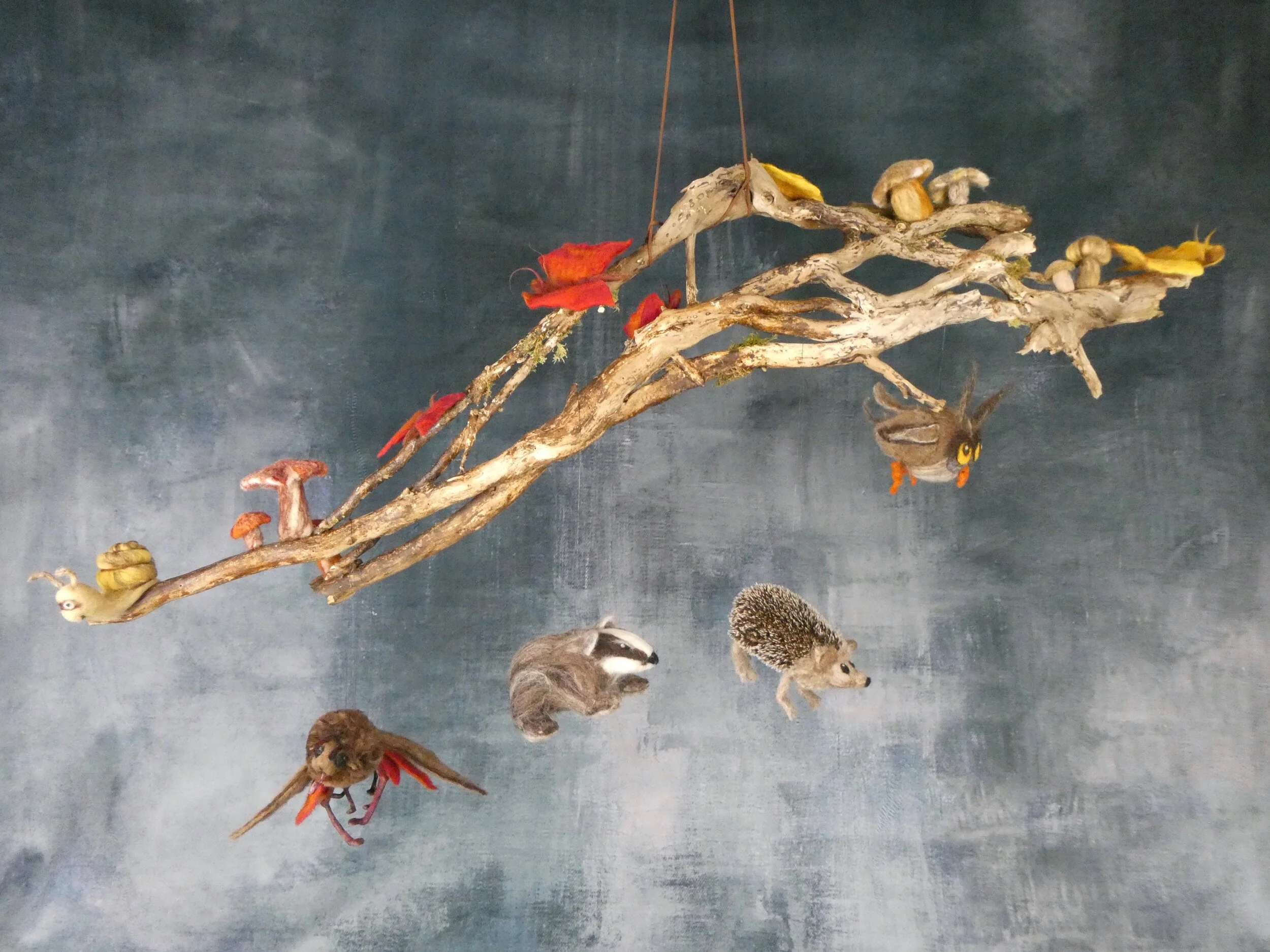
This mobile was created for the new baby of two close friends. They helped me decide to purchase Dormouse Wood (a major life choice) plus they both love nature. So this seemed the perfect option for a baby gift.
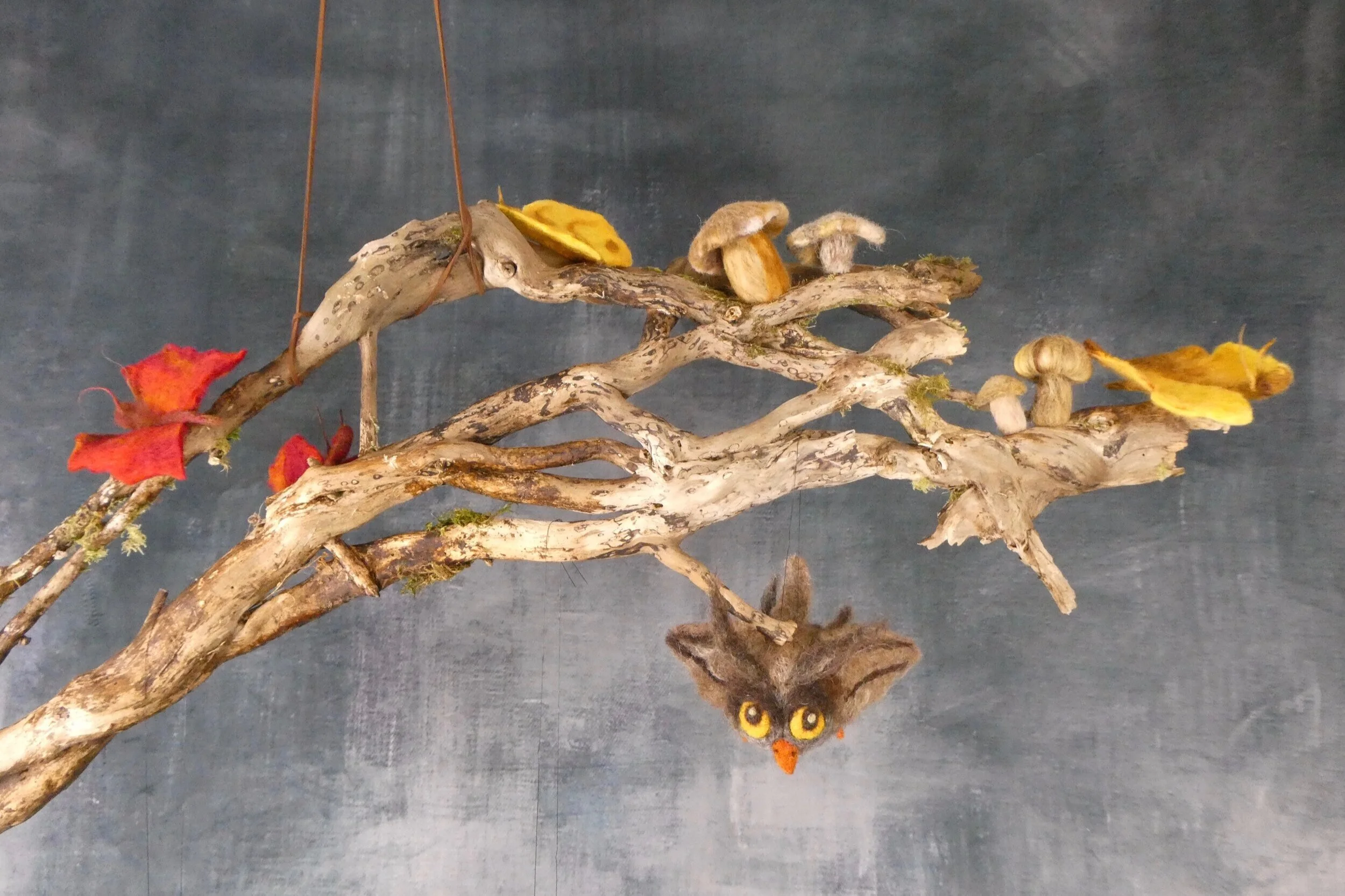
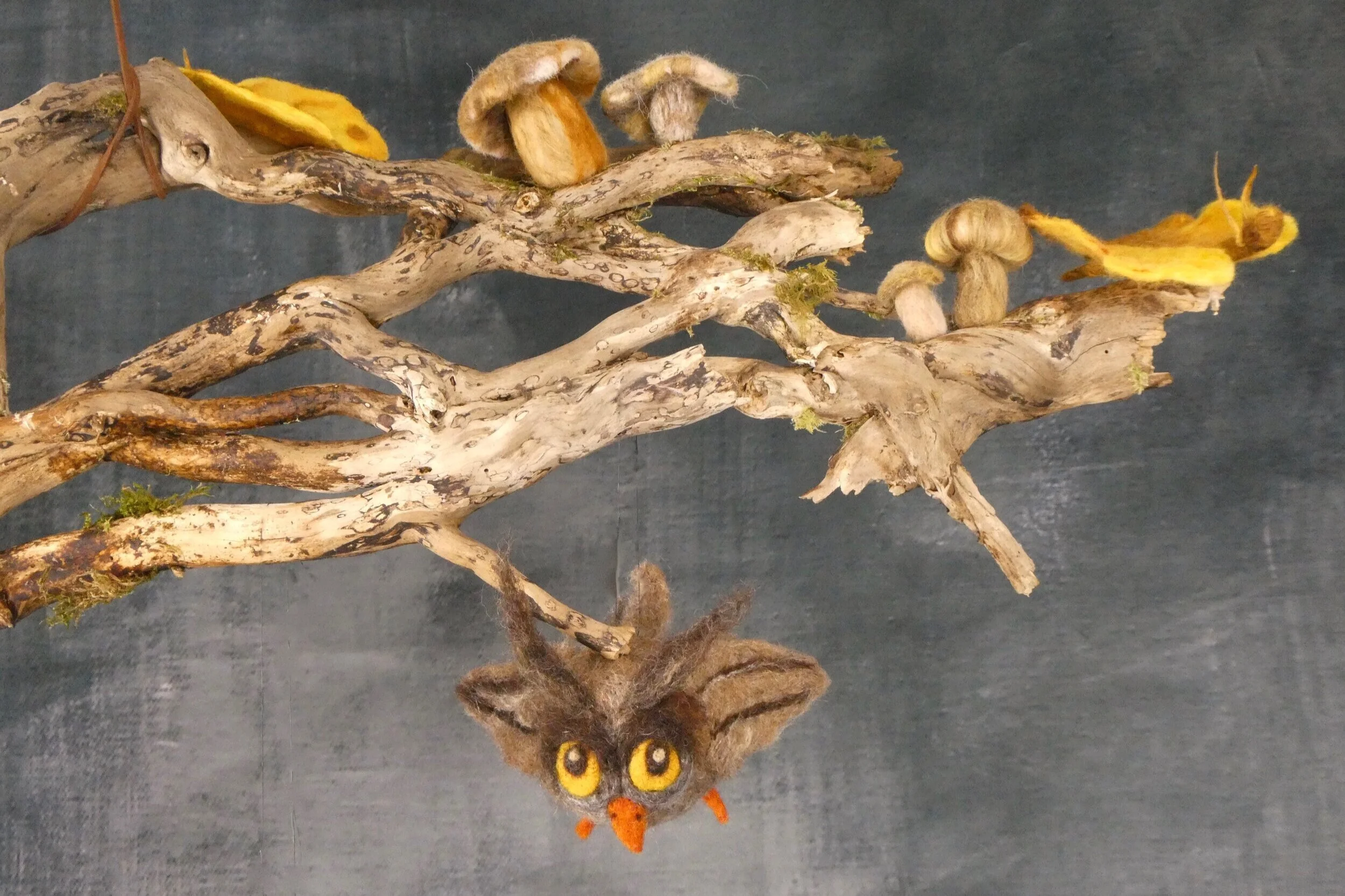
I selected a piece of ivy wood which I had collected from the woodland floor and dried out. I considered working on its surface, for example adding colours, oils or ebonisation, to darken the wood. In the end though I kept it completely natural, allowing the original character to shine through. It even has a bit of original moss in place. As it was for a baby I did clean down the wood with an anti-bacterial solution - mainly a precaution, as baby should never come in direct contact with it.
Ivy wood can be slightly brittle, unless it is harvested while it is still alive. However, as long as it is not dropped onto a hard surface or hit with force, this piece of wood should be fine as a hanging decoration. If it does ever get damaged I will transfer the decorations to a fresh piece of wood.
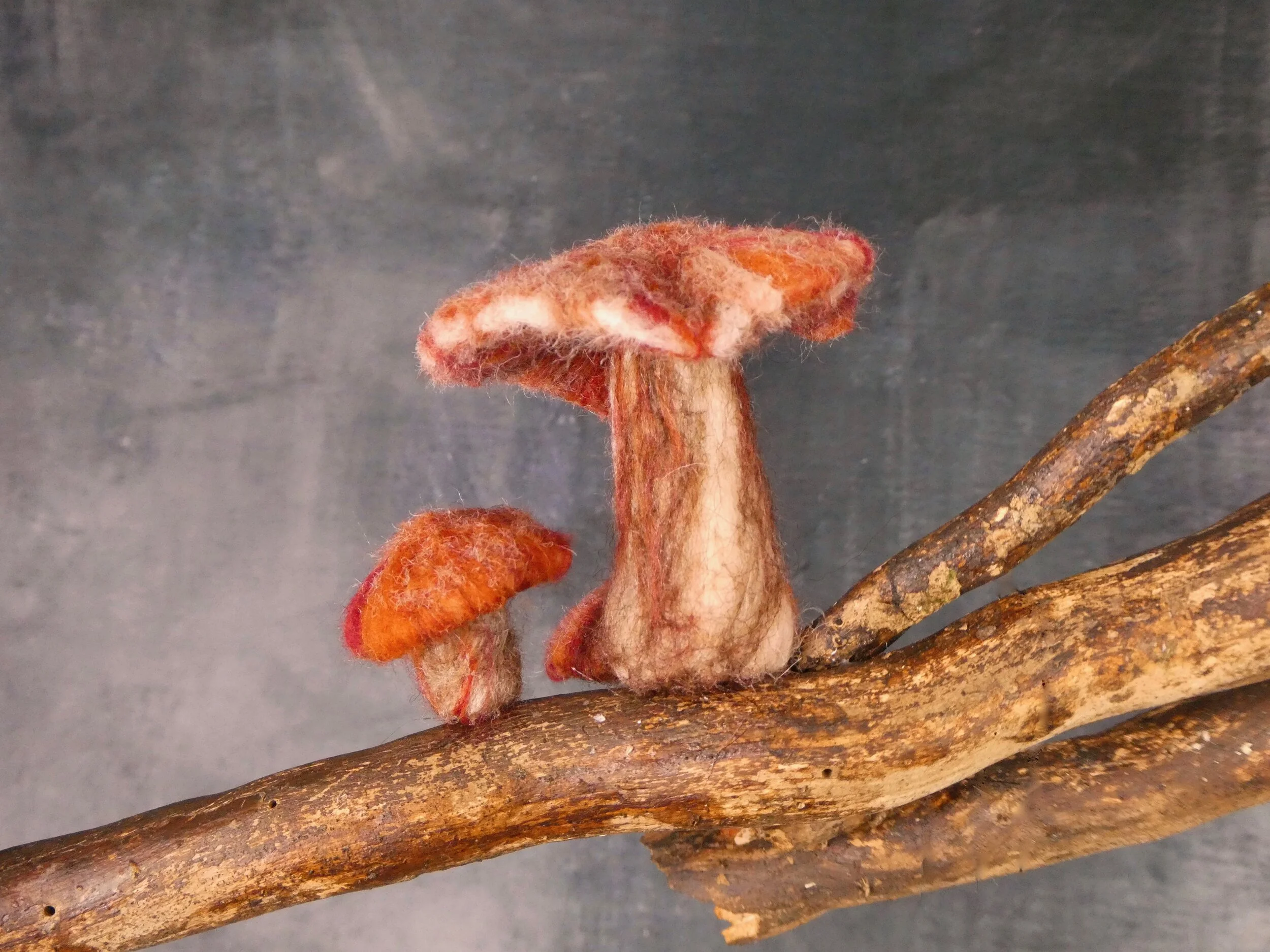
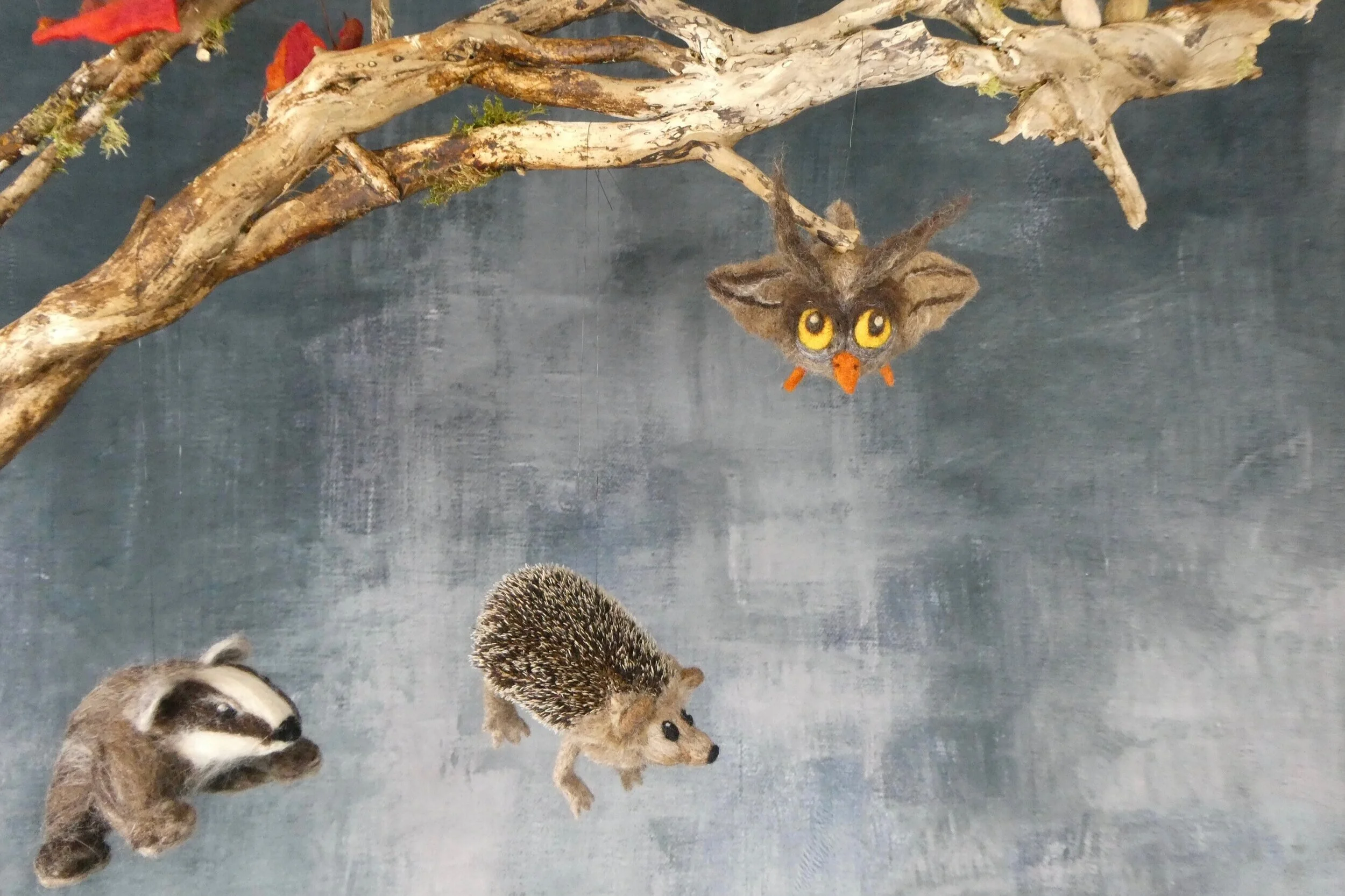
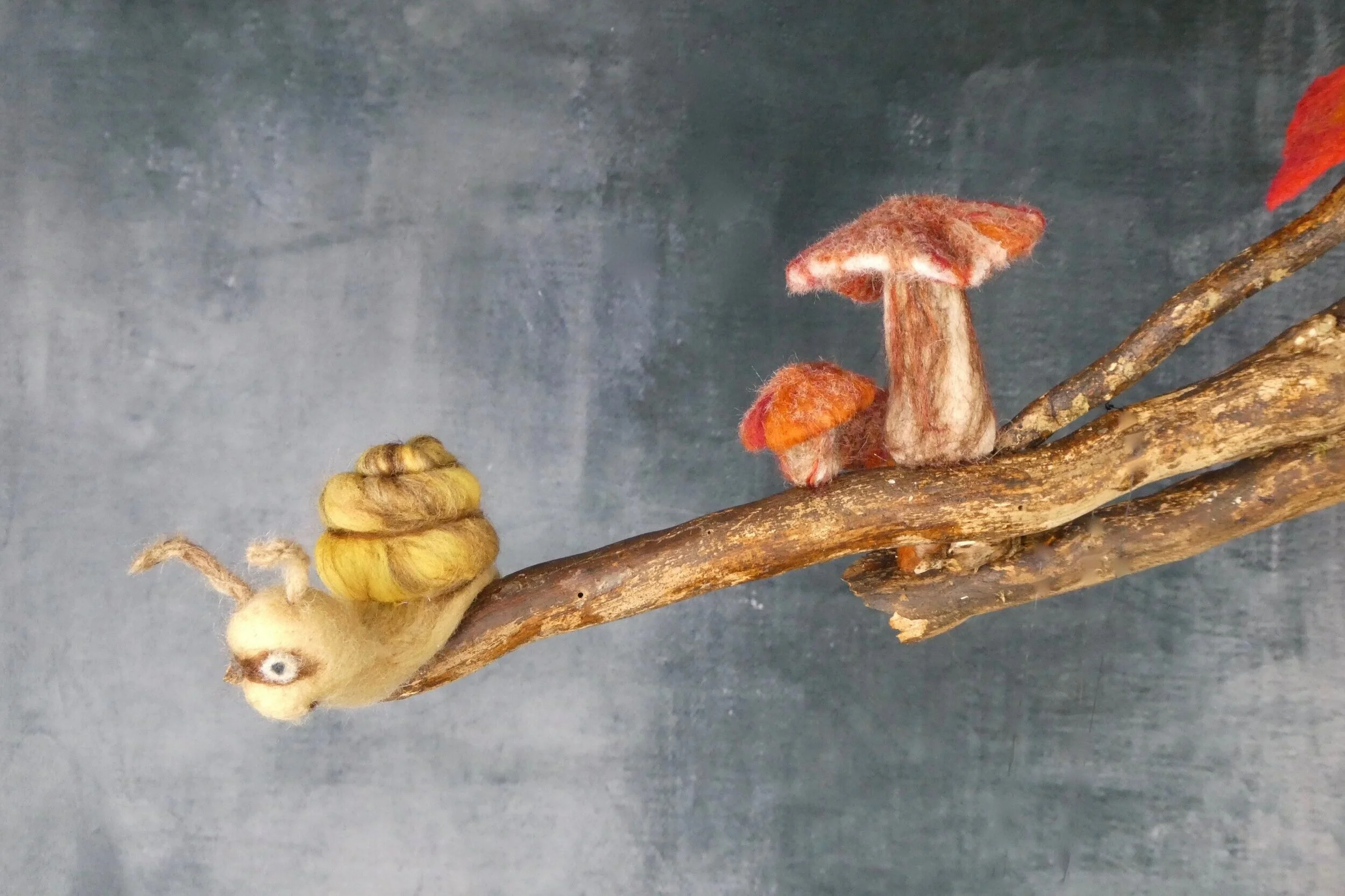
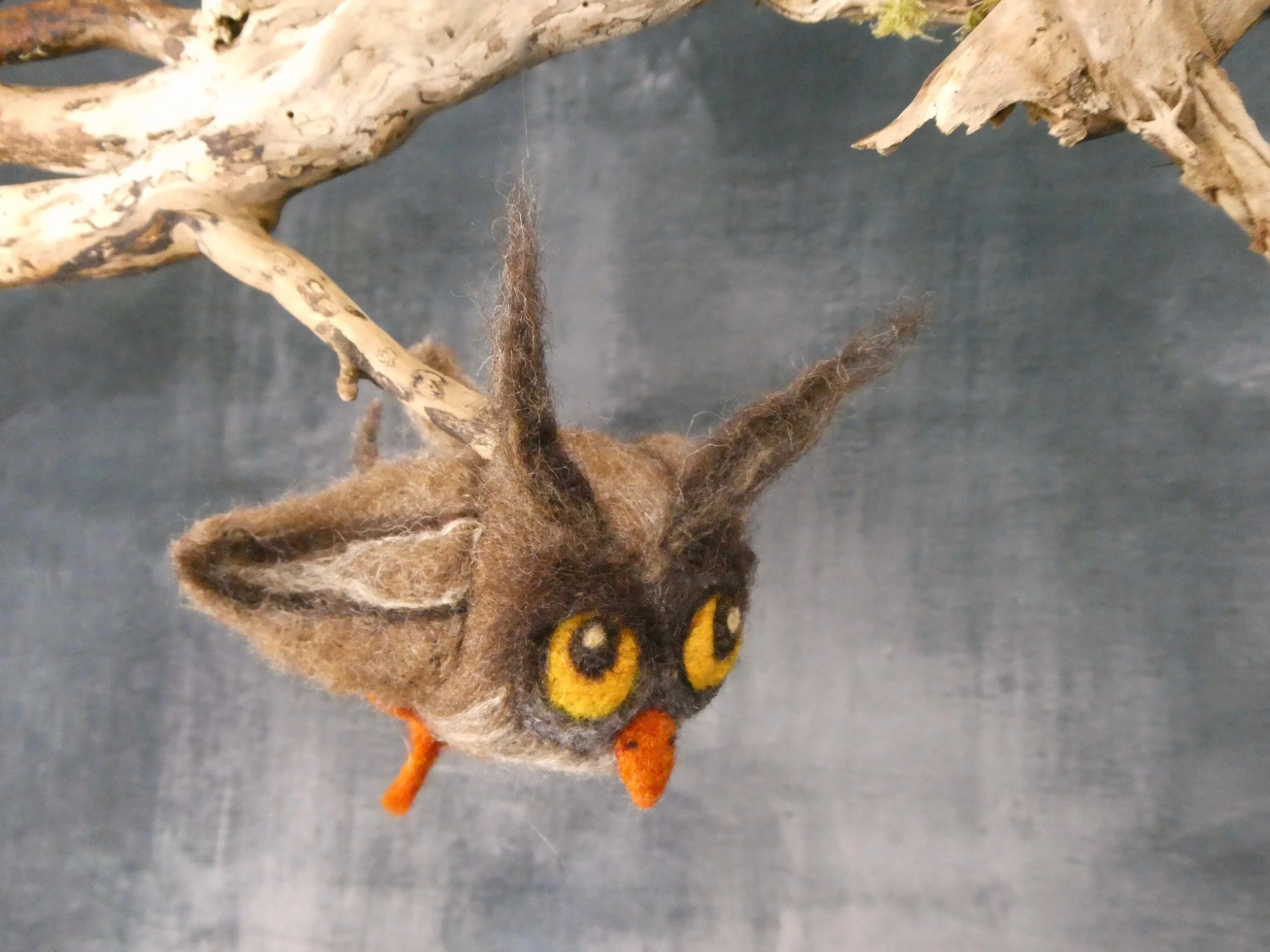
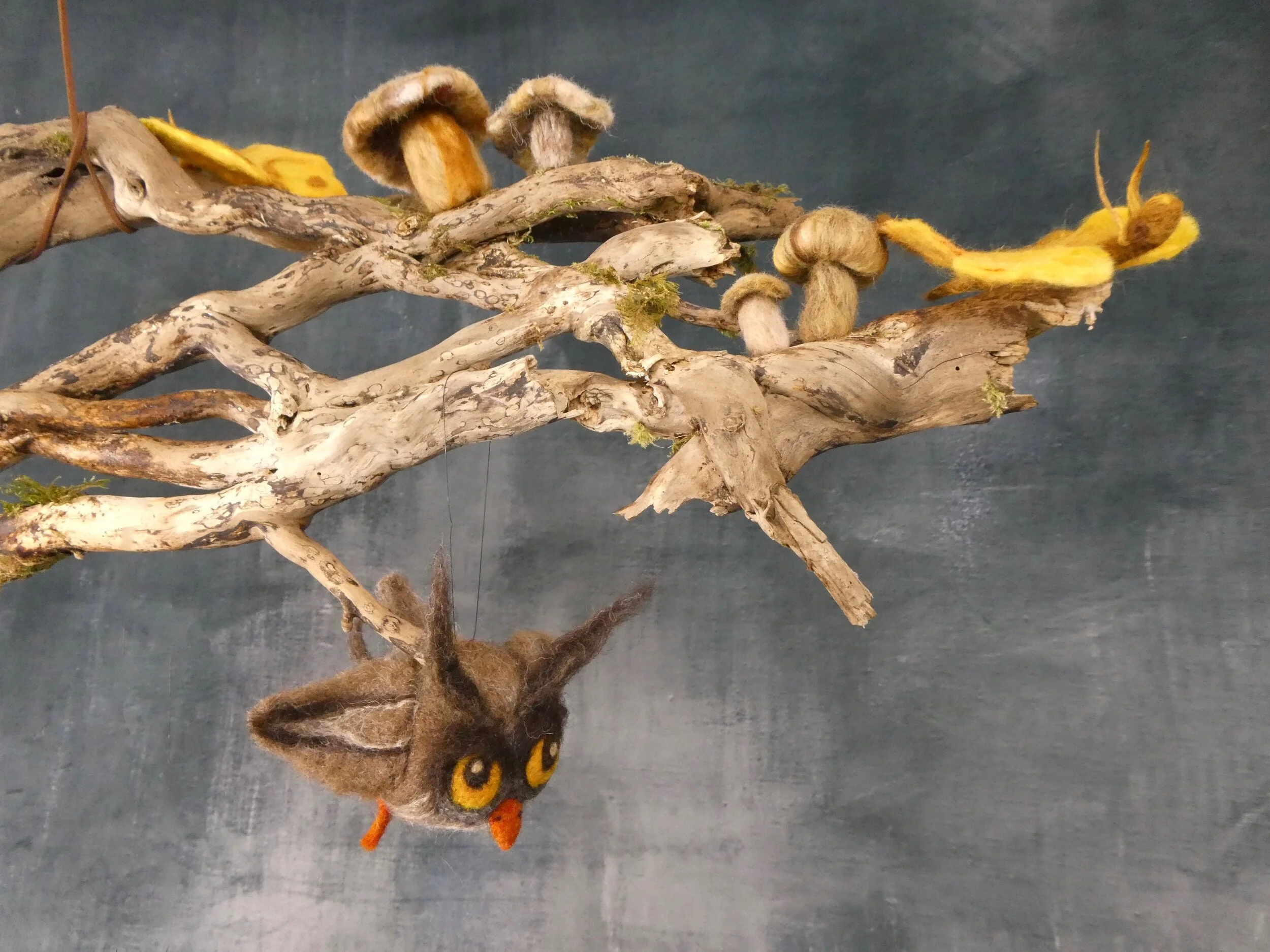
Having chosen the mobile’s centrepiece, I set about designing and creating the decorations. I decided on a selection of woodland creatures, plus some mushrooms. I wanted both hanging decorations and some pieces sitting on top of the wood so that it looked to good from every angle.
All the decorations are made using needle felting, which uses unspun wool.
I opted for quite simplistic designs with a childlike character. There are some really bright colours, while others are muted or in shades of black, white and grey. I am hoping this mix adds to the visual stimulation for the baby, I avoided adding wire armatures, or glass eyes etc. to minimise the risk of anything falling off and putting baby at risk. I also kept it natural. The only man made materials are the dyes in the coloured wool and a piece of faux leather cord to hang the mobile, plus some fine plastic jewellery thread from which the four hanging characters are suspended.
Needle Felting
There are two main types of felting.
Dry needle felting, which uses fine barbed needles to create 3D sculptures. The carded (cleaned and smoothed) unspun fibres are repeatedly stabbed to knit them into your desired shape and almost anything can be formed.
Wet felting, which creates a 2D result, such as decorative material or pictures, involves repeatedly rolling or pounding the wetted and soaped fibres until they form a cohesive sheet. The material is then rinsed and dried before finishing.
The result with either technique can be as simple or as intricate as you wish.
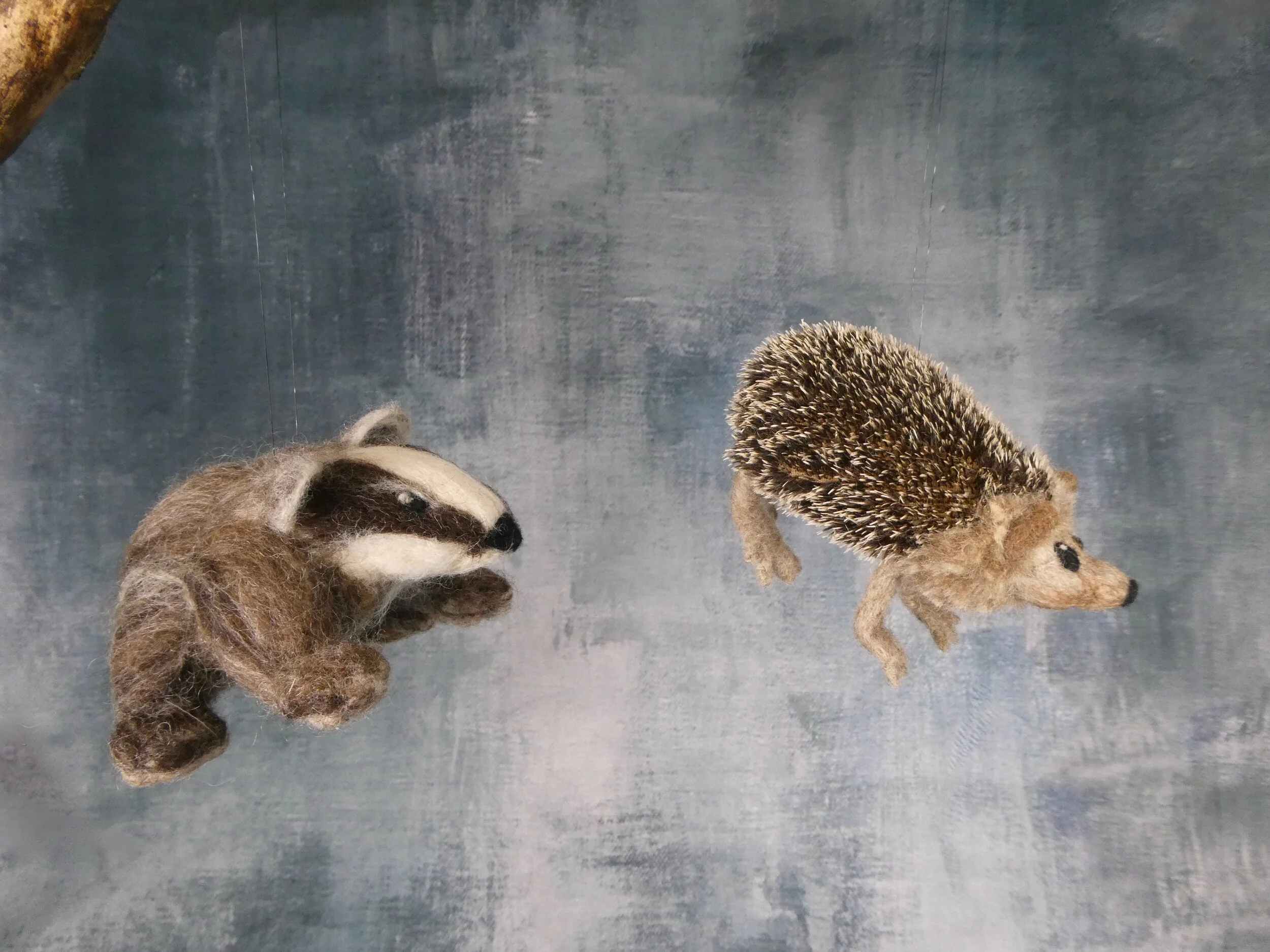
You can also create your own colours or tones by combining different wools. The badger, for example is made from a combination of undyed wool from a selection of old English breeds. In many cases I mixed the various fibres to achieve the exact tone that I wanted.
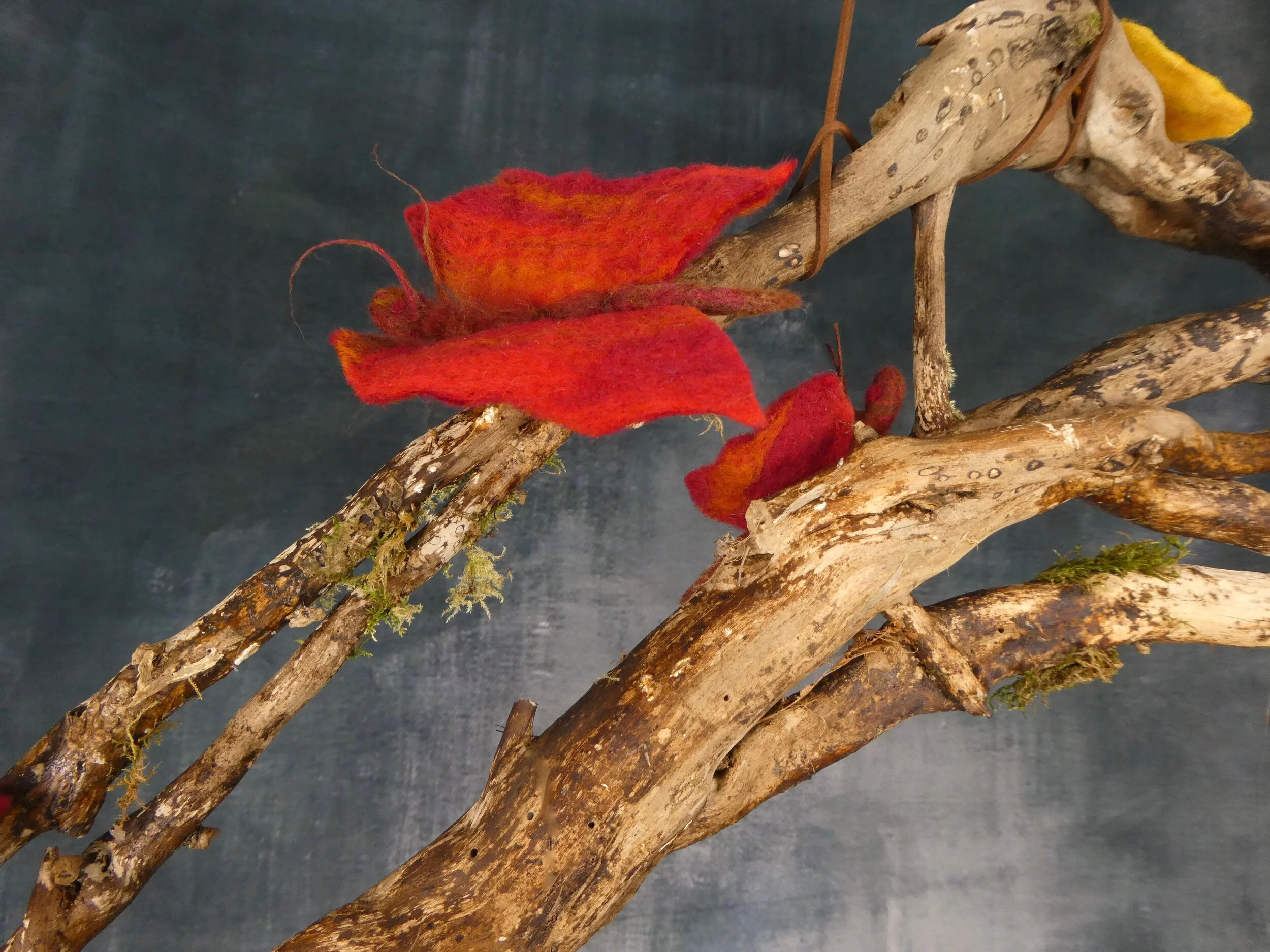
I used dry needle felting for everything except the butterflies. For these I made a sheet of multi shaded felt, utilising the wet felting process and cut that out as a base for the wings.
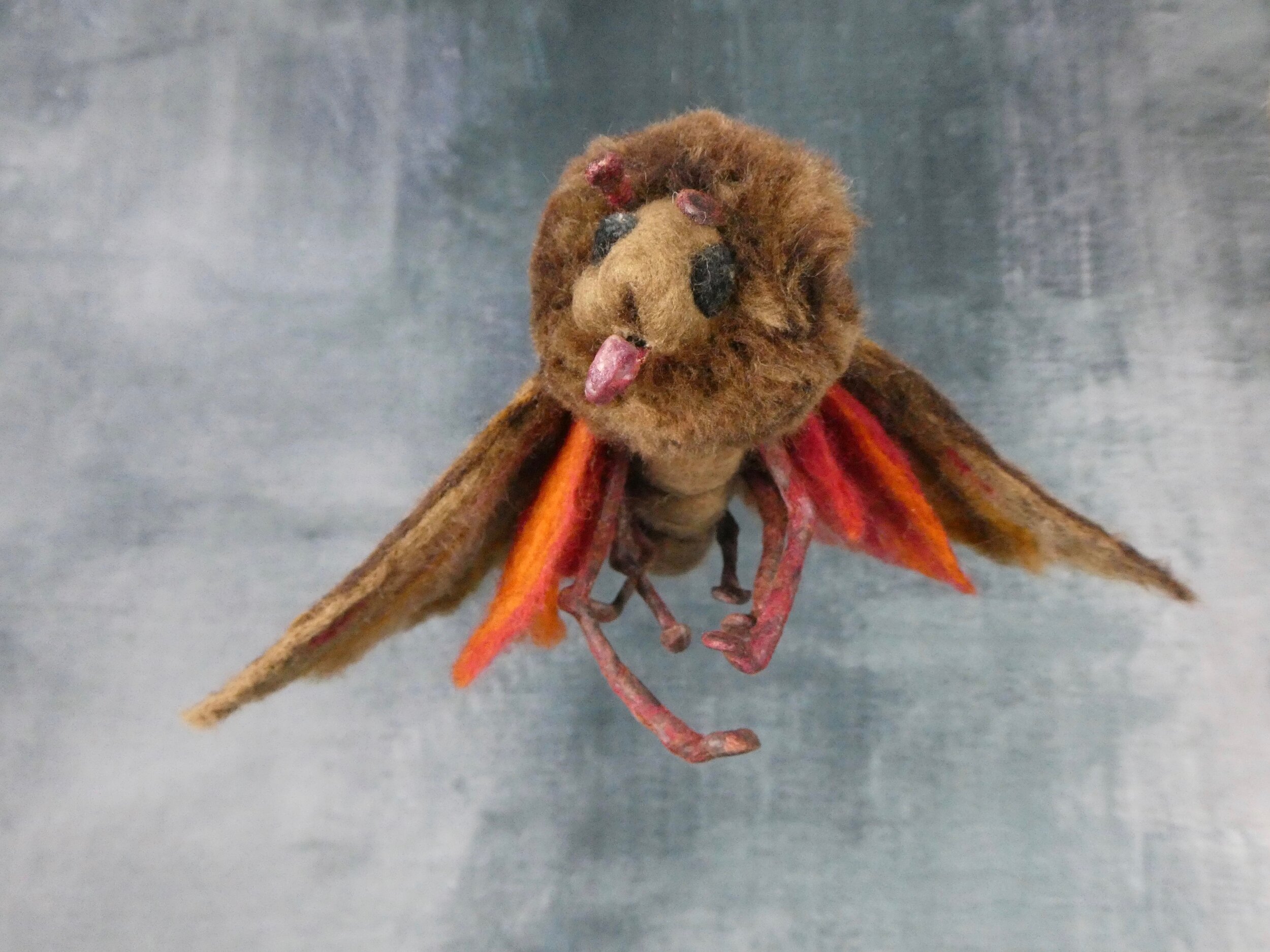
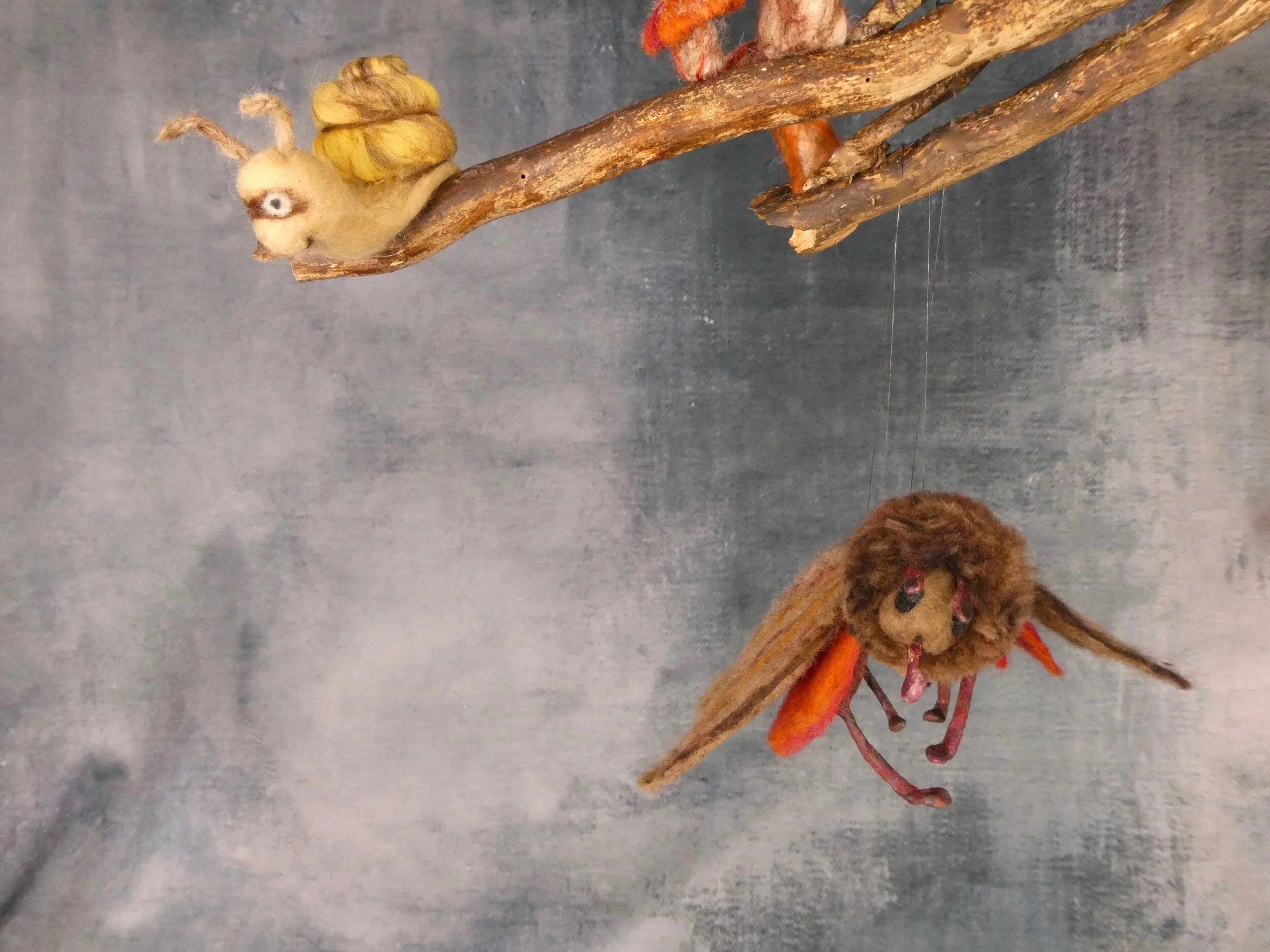
The most challenging creature was the Giant Lion Moth (a fantasy creation). I wanted the mobile to look interesting from below, so I added extra details underneath, such as bright orange feet for the owl and lots of detail on the underside of the Moth. That character has three layers of multi coloured wings, six shaped, dangling legs, a curly tongue, antenna on its head, plus a ‘puff ball’ style mane. In place of an armature I used a mix of beeswax and food grade oil to help the legs, tongue and antenna hold their shape. I am generally happy with the result of the wax mixture but would like to refine the process next time, so the wax distribution is smoother. (Sadly I also melted the whistle on my kettle, as I didn't notice it was too near the gas flame I used to work the wax deeper into the wool. Another lesson learned).
In summary:
Needle felting combines wonderfully with wood, as the colours and textures compliment each other perfectly. At its simplest a piece of wood can form a wonderful base or stand for a needle felted character, sculpture, or pretty much anything special you want to display.
Moving forwards, I have several quite different ideas in the pipeline and will share them in due course. For now, if you return to the Inspirations & Projects page you can find images of another piece I made where I used items from Dormouse Wood to build and stock a shop. This was (of course) run by a needle felted squirrel serving a robin customer.
This is only the briefest overview of needle felting which is a complex topic. If you want to know more you can find details of the UK store I generally use for my needle-felting supplies on the Links page. I also include a link to a talented artist in the US who has made many helpful instructional videos on needle felting.