
It Stinks and I’m All Green!!!
The Challenge of the Woodland Pond (plus Labradors)
We don’t have that many visitors but when we do I really think hard about whether to include the dogs in the party because (being typical Labradors) they will inevitably manage to jump into the pond.
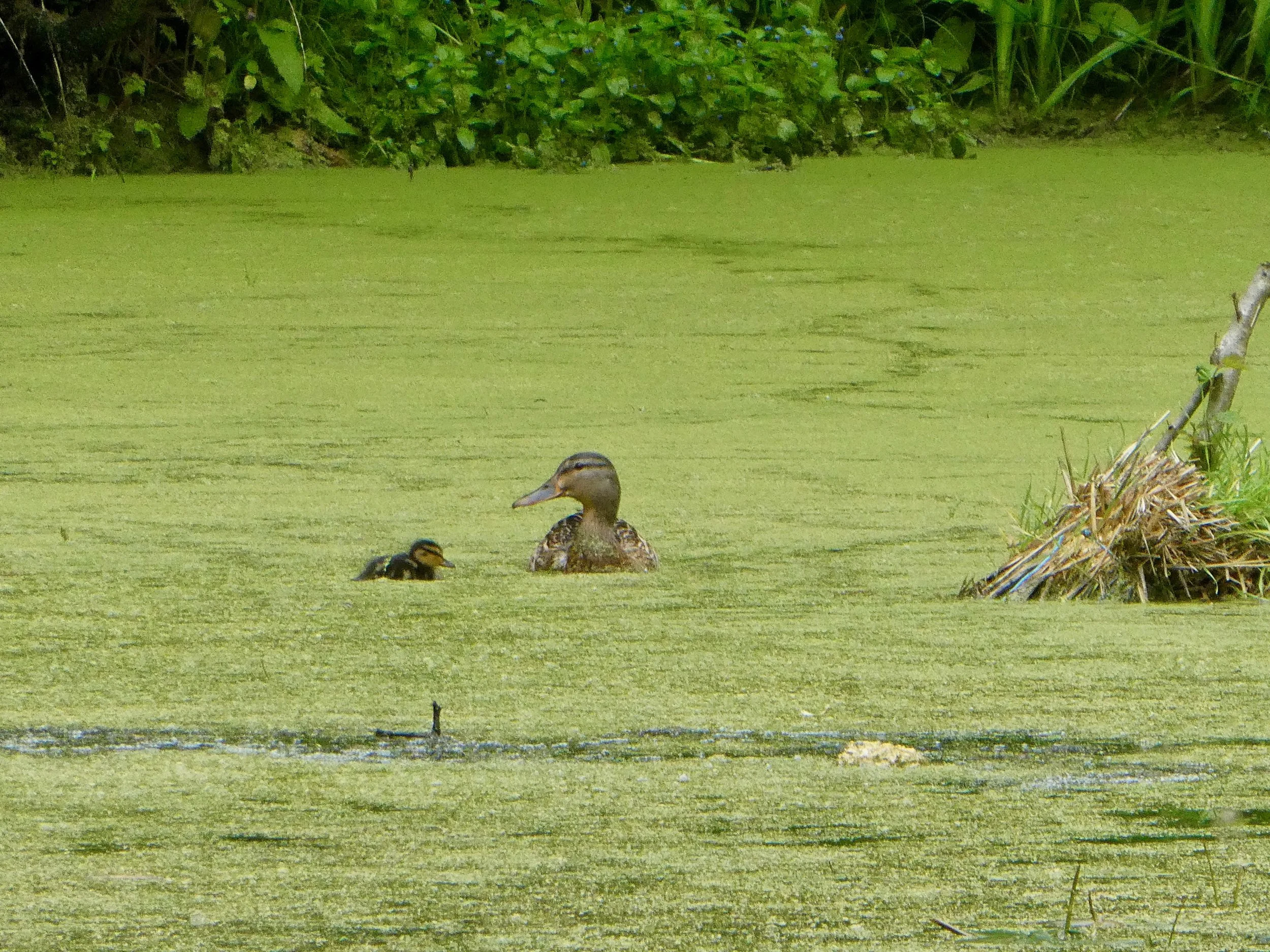
Our ducks are tolerant creatures. They take toppling trees, pond weed and swimming Labradors in their stride.
Shortly thereafter they will share their unbridled joy with everyone else, showering them with a liberal spray of stinky water and bright green pond weed. They generally follow this up by rubbing happily against everyone’s legs.
Strangely this is often not totally enjoyed by the humans in the party. Actually even I don’t find it particularly appealing. I am however so besotted by my dogs that I set aside wet knees, pond weed spattered clothes and dubious smells in favour of watching them have fun.
One day though, I hope the cries of protest will mention only the wetness the dogs have distributed and the complaints about bad smells and green ‘gunk’ will be a thing of the past.
I look forward when our much loved woodland pond will not stink due to the fermenting silt from the leaves and debris that fall into it. A future when the pond’s surface will be gently dappled with the healthy green of aerating plants, instead of being suffocated by a thick skin of pond weed.
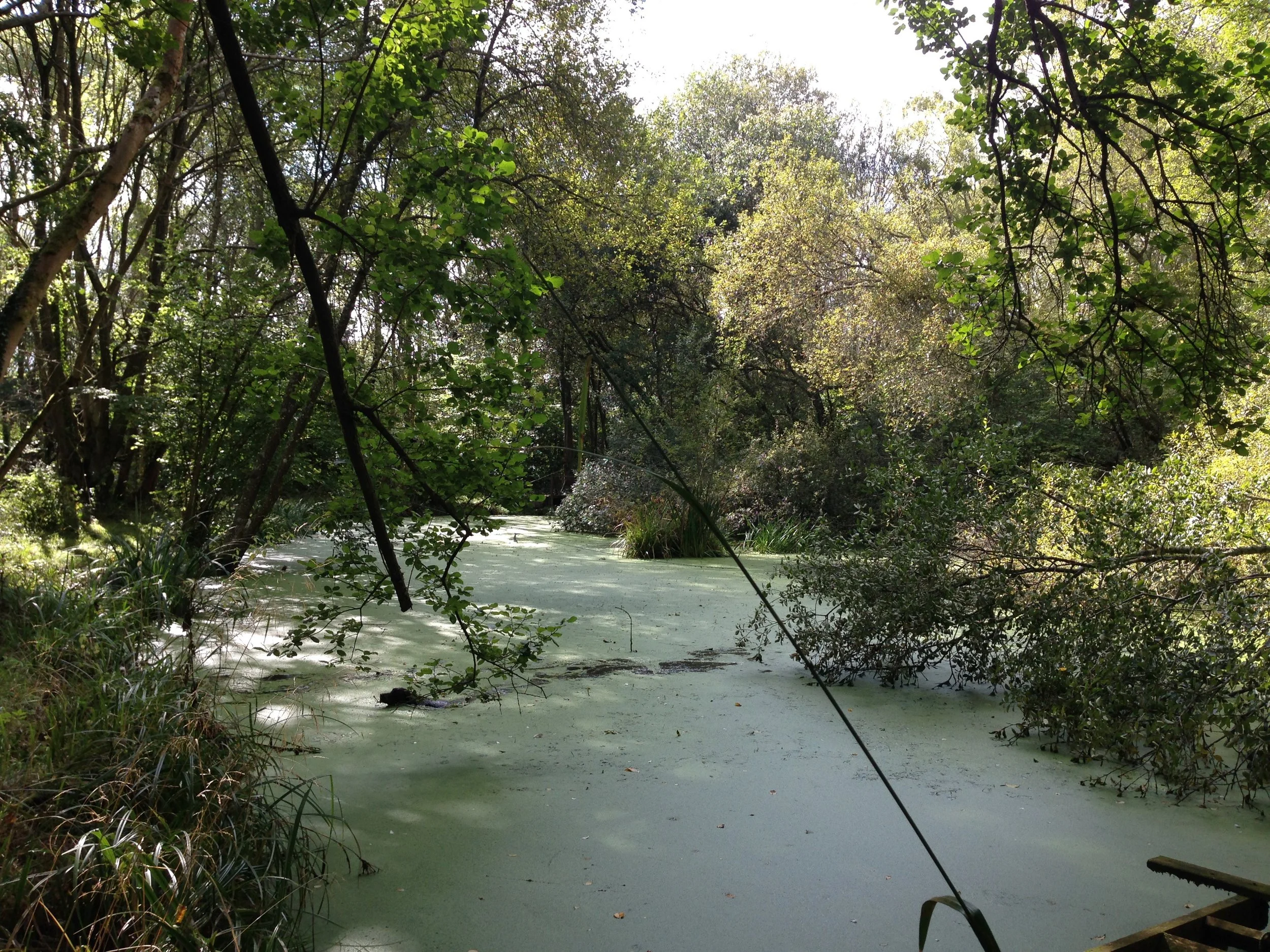
The pond when I bought Dormouse Wood in October 2017
The problems I am dealing with are pretty usual for woodland ponds. They tend to be closely surrounded by trees (which drop in leaves and all manner of bits and pieces). The trees also tend to limit the amount of wind blowing across the pond which helps with aeration - especially important if, like ours a pond is fed by ground water, with no lively inflow to add vital oxygen.
In other, words a pond in which the water is relatively static, is overshadowed by greenery and into which that greenery drops lots of organic matter, has an uphill battle towards anything approaching ‘crystal clear and mountain fresh’.
What Not to Do
In the last two years I and several friends have done a lot of research. That included inviting a number of experts along, especially those with a knowledge of improving water quality naturally. I ended up with three key things I would not do. 1. No chemicals. 2. No dredging. 3. No skimming the pond weed.
'No chemicals’ was something I didn't really need to be told. Although there are a few so called ‘natural’ products out there, which claim to be completely harmless. I however was advised to steer clear, since their impact has not been fully tested and it was possible they might harm the pond’s eco-system, plus the benefits are, as yet uncertain.
The second (dredging) was off the table for three reasons. Firstly, it is incredibly expensive if you buy in professional support. Secondly, I was warned that we could be accidentally killing or damaging all sorts of important or helpful plants and creatures by skimming off the bottom of the pond. It would also be impossible not to damage areas of the bank and surrounding land. So, no to dredging …
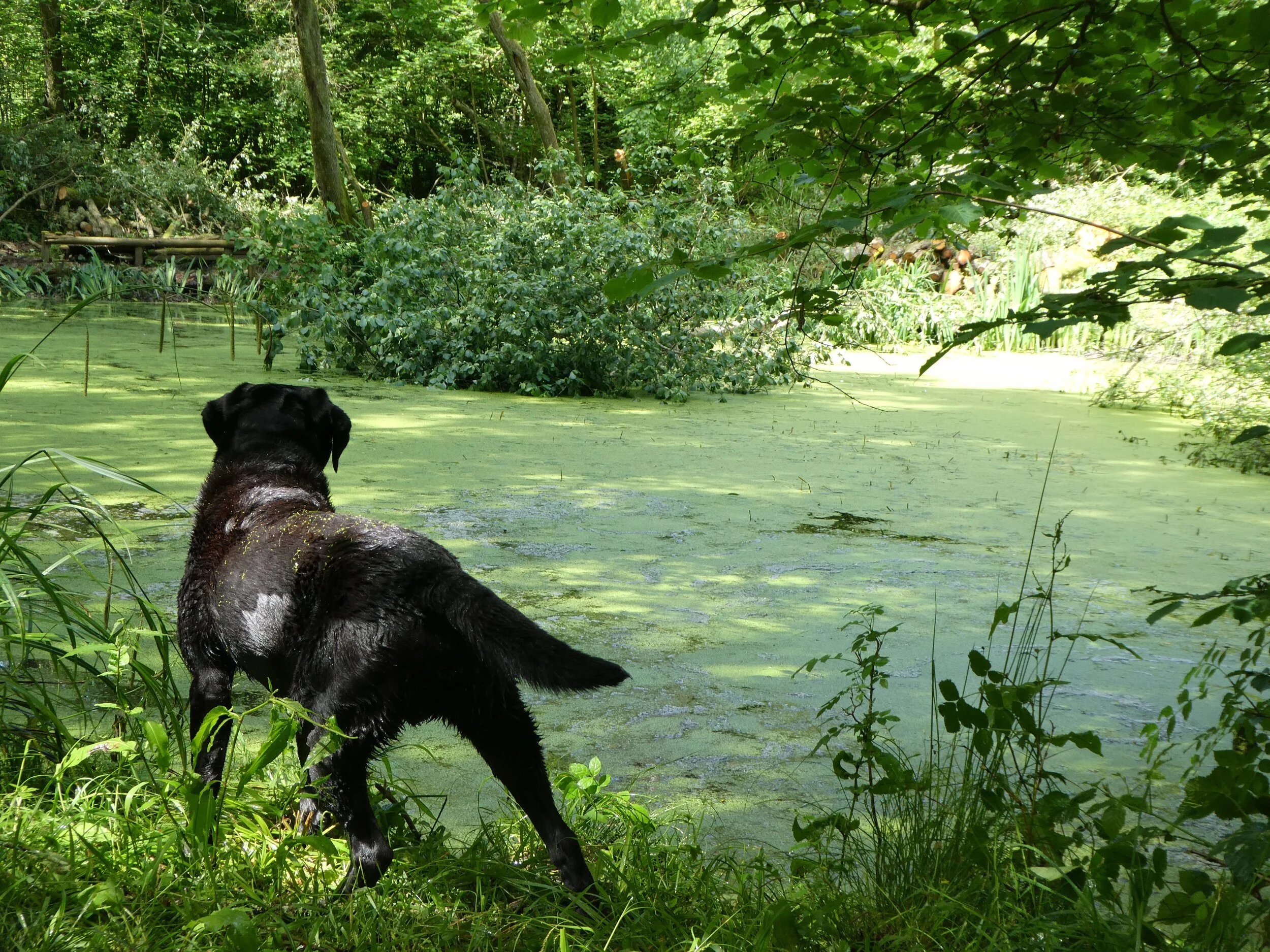
Summer 2018. Less trees but the pond weed is still very dense
The third (pond weed skimming) was another ‘no’ not because it is a bad thing but due to the pond’s size and the fact I had a maximum of two people to help (who would need paying). Importantly, skimming pond weed is not a one off job. It keeps coming back and I don’t have the time, people or funds for such an ongoing task. I’ve watched videos of pond weed skimming done with fairly inexpensive kit but so far they have all involved at least half a dozen volunteers, who are presumably willing to keep up the effort at regular intervals, something the videos failed to mention. If I ever find a feasible option I may re-visit skimming.
That summarises the key things I was not going to do.
What to Do
Firstly I needed to keep the pond free of fallen trees. This is actually quite a challenge, as a lot of the trees near the pond are water loving willows. Their roots are drawn towards the water source, so they tend to grow slightly tilted towards the pond since there are more roots at the front where they can get water most easily. Willows are not sturdy trees, tending to grow fast and then break, split or even rot from the core. After a spell of bad weather, it is common to see a willow leaning even nearer to the surface of the water, or actually having fallen in. Tree clearance from the pond has been an ongoing activity.
Fortunately the second priority supports my determined “no trees in the pond” stance. A small number of the trees that are likely to fall in at some stage will be felled before that can happen. Dragging them out of the water with only a hand winch is incredibly hard work, especially as they tend to sink into the thick layer of silt. I should mention here that I pay my Forester Rob to undertake this but really this task goes above and beyond normal forestry work and I am extremely grateful for his determination and fortitude.
Having less trees around the immediate edge significantly benefits the pond. It opens it up to far more sunlight and fresh air, both good for water quality. It also reduces the volume of leaves and twigs that fall into the pond, fuelling the stagnation. Obviously I won’t remove too many trees, so leaves and debris will always fall or blow in but reducing the amount certainly helps.
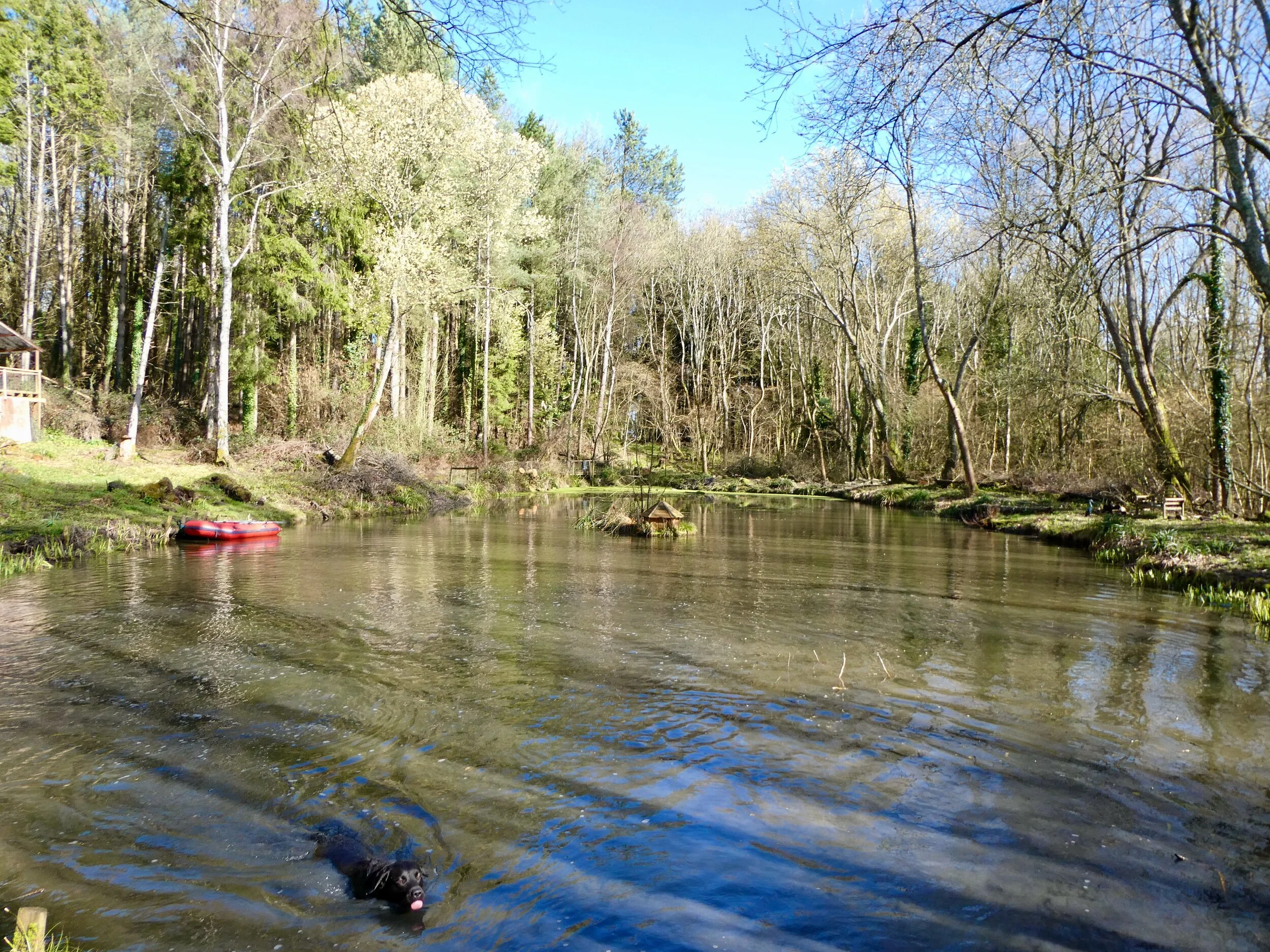
Winter 2018. The pond weed has receded for the winter and the pond is tree free
I do have an aerator, powered by a generator. In all honesty though, given that it rarely gets switched on and is quite small, I’m not convinced that it is making much difference.
One genuinely natural remedy I have tried was the addition of bales of barley straw dotted around the pond. These apparently emit enzymes as they decompose which help to clear algae. It is important to get the amount right, as adding too much can make matters worse.
A couple of bales were plundered by the ducks for nest material (I’m glad they were extra comfortable). The rest seems to have started doing its job, as the pond weed was clearly less dense this year. It’s too early to know if this is a coincidence but I will renew it next spring and see what happens.
Next year I will also try introducing grass carp to further control, the pond weed. In China, where these fish originated, they have been used to control weed growth in rice paddies for around 2000 years. The practice has actually been used worldwide. For example, grass carp were used in Egypt to clean the Nile River. Hopefully they can help Dormouse Wood as well.
The plan will be reviewed each year and adjusted if necessary. I am though currently fairly hopeful that progress toward clearer and less pungent water is being made, though only time will tell. As with much related to woodland management it requires time and patience. I will update you in the spring.
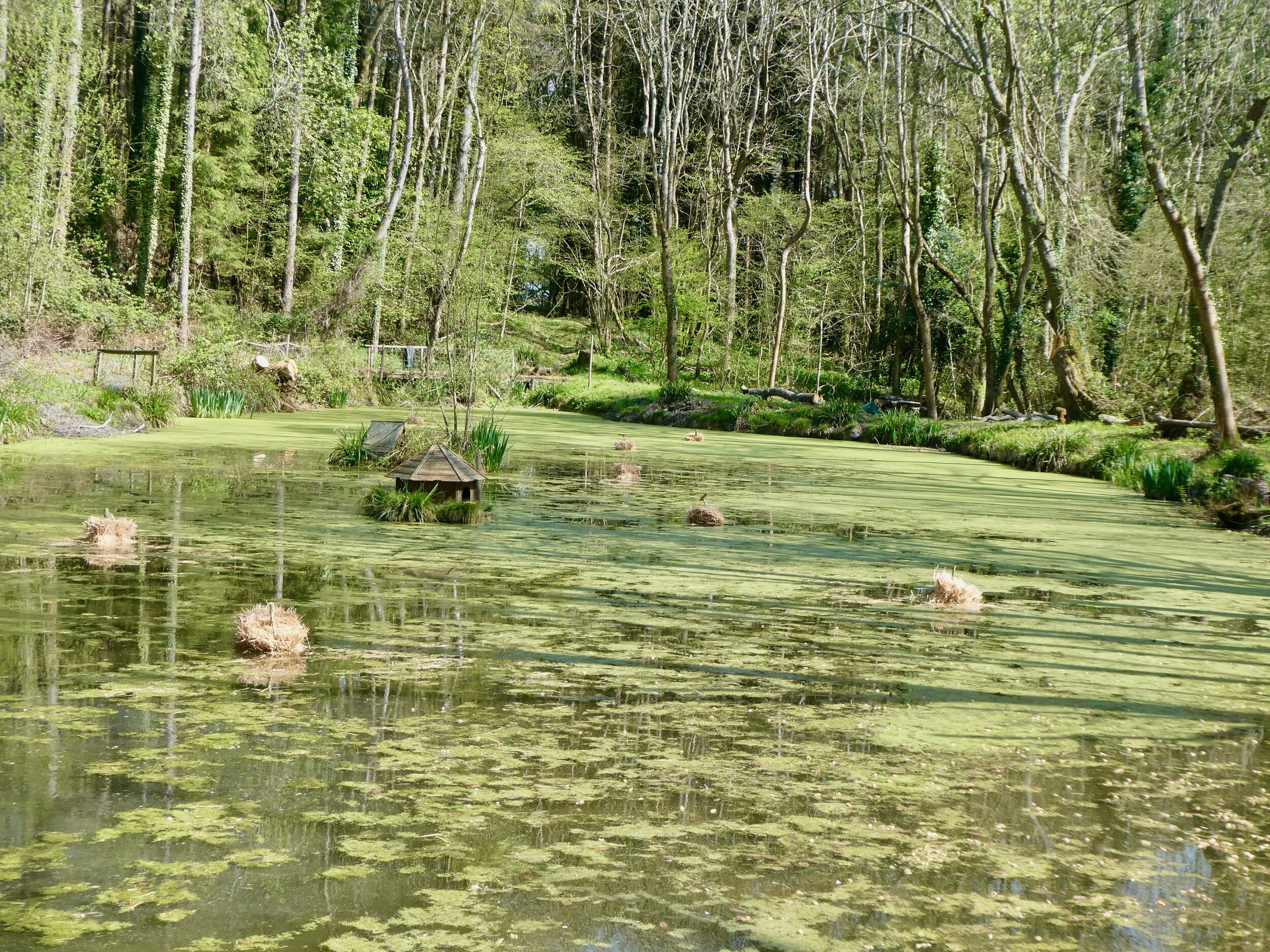
Progress as of summer 2019. The barley straw is in place, the pond weed is less dense and some oxygenating plants are starting to push through