
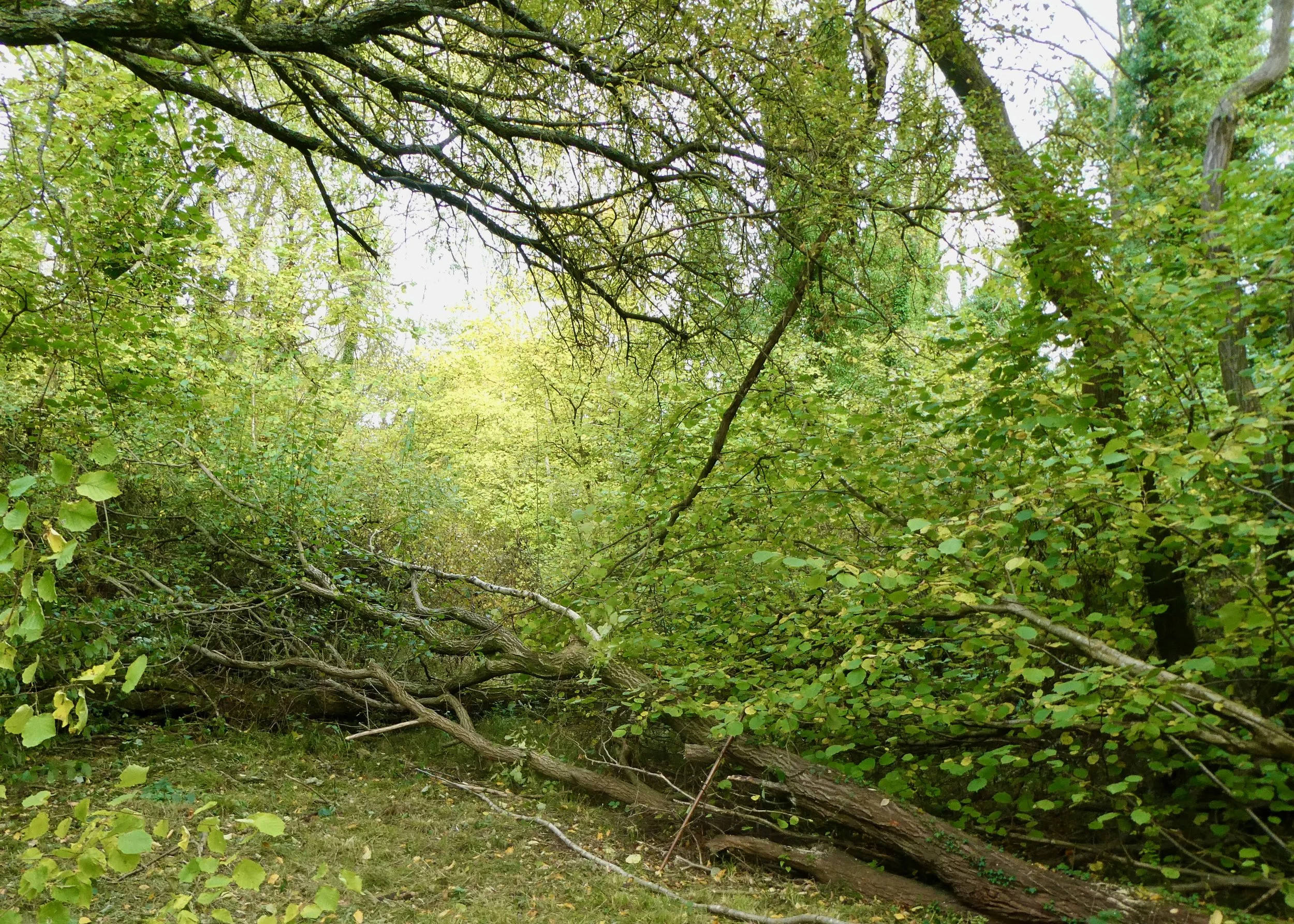
The wood is full of obstacles for the walker to navigate. This tree was lying directly across one of the historic rides.
Let There Be Light
The importance of light in a woodland
One of the things I love about Dormouse Wood is its wild and untamed character. In much of the wood, taking a walk involves scrambling across water filled ditches, clambering over fallen trees, ducking under ivy clad branches and often taking de-tours where the growth is so dense a human cannot pass without causing damage. You don’t stroll in Dormouse Wood, you embark on a mini adventure. And it’s fun!
This meant that, when about a year into ownership of Dormouse Wood, the time came to start re-opening the historic rides (woodland paths). I had mixed feelings.
Personally I enjoyed following the deer tracks, or simply making my own way around and I didn't feel the slightest need for anything more. However, I will confess that not all the friends who visited agreed, being used to the wide and fairly smooth pathways of the public access woodland which covers thousands of acres in the area. When one friend said firmly that we really needed paths, I pointed to, what to my, now accustomed view, was a clearly defined deer track and replied that we already had plenty, they were just narrow. I found it interesting that she genuinely couldn’t even identify what I was pointing at, as a path. Oh well!
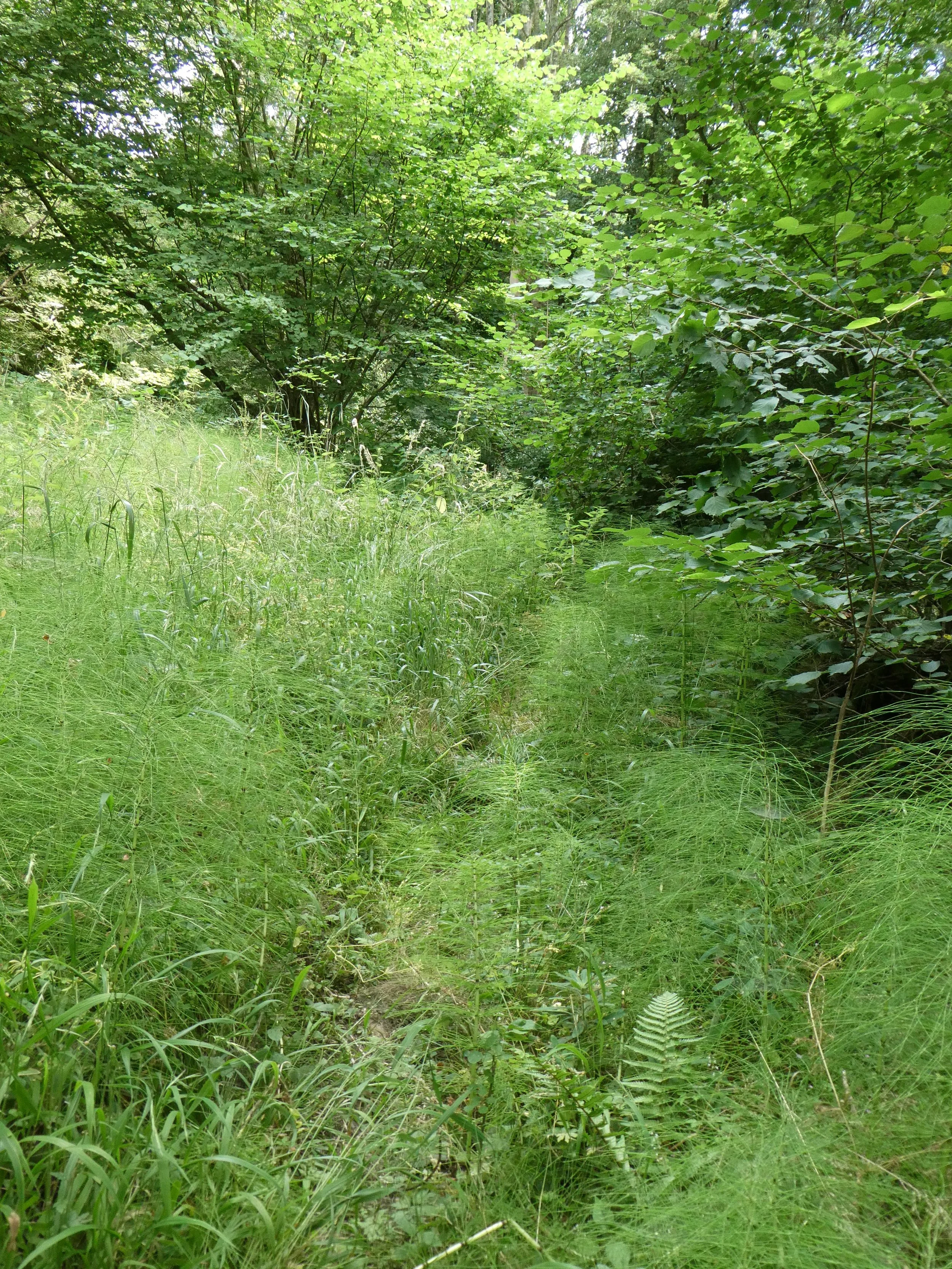
A typical deer track. This one heading to the top of the wood.
Anyway, back re—opening the rides. These form open, sunny corridors through the woodland. Allowing more light in helps a wider variety of wildlife to flourish and many species prefer to live in the first ten metres from a woodland edge, where there is more sunlight. At the edge of a ride short, small plants such as grasses, herbs and flowers develop, which butterflies thrive on. Reptiles also enjoy these sunny spots. Moving back from the ride, short vegetation gives way to slightly taller shrubs. Further away still, young trees grow before you move into full woodland with taller, more mature trees and a shadier understory.
In general, woodlands which are structurally diverse and have a wide range of micro-habitats have greater biodiversity. Structural diversity means that there are not only trees of different ages but also varied physical layers to the woodland. For example, starting at the ground and working upwards: leaf litter and soil, ground vegetation, an understorey of saplings and shrubs, taller coppice and young trees, ending with the high tree canopy. Micro-habitats include deadwood (standing or lying), damp and shady areas, sunny, sheltered glades, scrub, ponds, full size single stem trees (known as standards), very old trees known as veteran trees) as well as pollarded and coppiced trees.
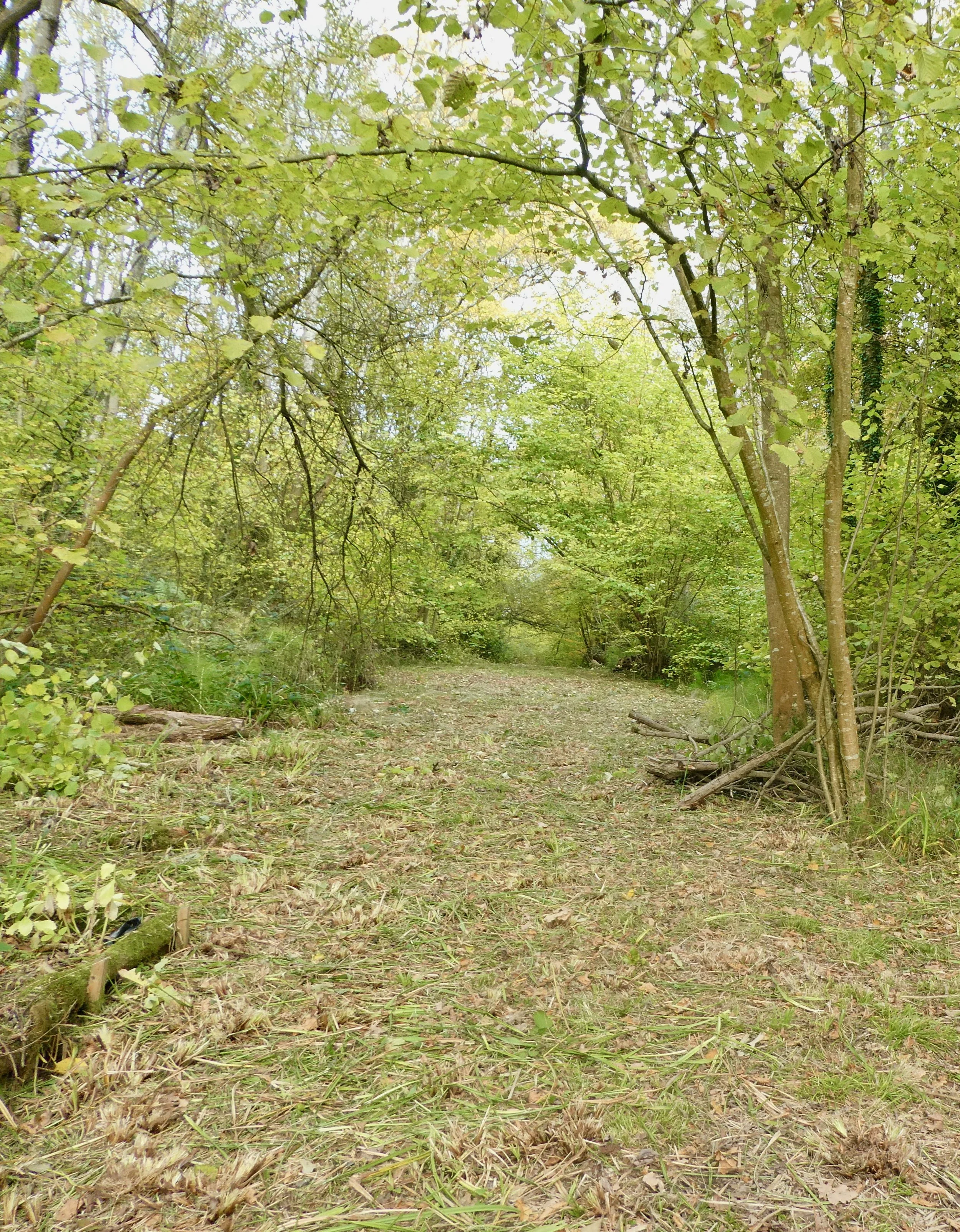
The same deer track just after re-opening into a ride
As I learned abut rides and what they contributed, it was easy to see that that Dormouse Wood would benefit significantly from some open areas. Re-creating the original rides was the perfect solution. A side benefit would be the ability to walk around parts of the wood more easily and have better access when work was needed, such as removing dangerous trees.
Having made the decision we hunted out and marked the old rides, which were overgrown and often buried under fallen trees and years of debris. In the end we discovered a circular ride. It started at the parking area, climbed uphill, past the pond, curved round behind the conifer plantation near the top boundary and then gradually dropped back down towards the one large clearing, which is just beyond the entrance.
It was slow going re-moving entire fallen trees and working through years of tangled growth. It also created a lot of surplus material which needed sorting. It was variously cut into firewood, set aside for this website, left to form habitat or burned. A month or so later though, it was done. We had our very first ride.
During the summer our contact in the South Downs National Park visited to undertake a follow up survey of the flora. I treasure his observation that opening up the rides has already increased the number of variety of butterflies in the wood. As we walked the ride by the pond we saw a proliferation of Brimstone, Orange Tip and Speckled Wood butterflies on the wing.
He strongly recommend we continue our efforts, including removing the trees still overhanging some sections. So, we will continue this winter. The plan is to find a partial silver lining within the problems caused by Ash Die Back disease. We will target affected trees along the edge of the ride, making it wider and creating intermittent bays. This will maximise the ride’s benefits without having to cut down trees we would otherwise have kept.
Most of Dormouse Wood remains untouched, so those of us who enjoy pretending to be a Hobbit “going on an adventure” can easily do so. However, having seen the results, I am a convert when it comes to finding appropriate ways to bring more light to the woodland floor.
So yes, let there be light.
Another section of the ride, a few weeks after its creation. You can see the re-growth and how in the long term it would benefit from the removal of the trees still leaning over it.