
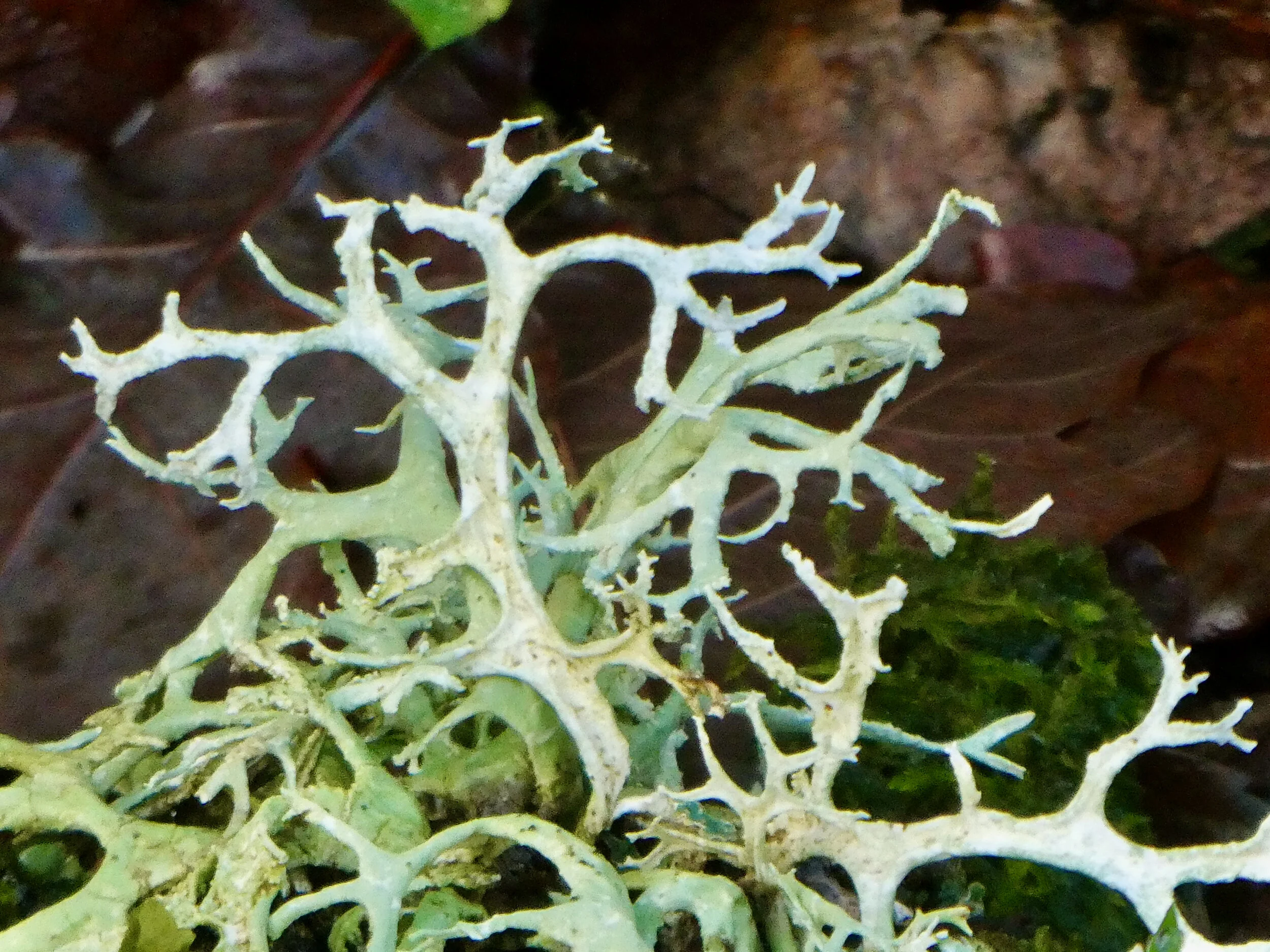
Coral style lichen in Dormouse Wood
Like much of the UK, Dormouse Wood has been very wet in the last few weeks. The pond has overflowed its banks on the lowest side, the paths are mainly puddles and everywhere is generally squelchy.
That also means masses of twigs and their associated lichens have been washed to the ground. So every visit to the wood has involved extra lichen picking. I keep a separate bag in my pocket to preserve these tiny works of natural art so they get home safely.
Collecting lichens has become a bit of an obsession this year. To the point where I actually pulled my back recently due to the constant bending. I just HAD to have that one extra piece; and that one and that one and that one … you get the idea. Each piece is tiny and they are strewn around the woodland, so you have to pick up each one individually. Do it enough times and it’s ‘hello sore back muscles’. Oh well.
So, why have I fallen in love with lichens?
There are several reasons, including the fact they are a wonderful addition to many craft pieces. However the main one is that I am fascinated by their amazing, intricate miniature patterns and colour variations. Several types remind me of coral forms, others of seaweed. Some of the lichen in the wood is almost porcelain white, whilst at the other end some is an almost iridescent green. The brilliant yellow shades are also entrancing, especially when set against the colours of the woodland. Having a section of lichen on the palm of your hand has the feel of holding a miniature world.
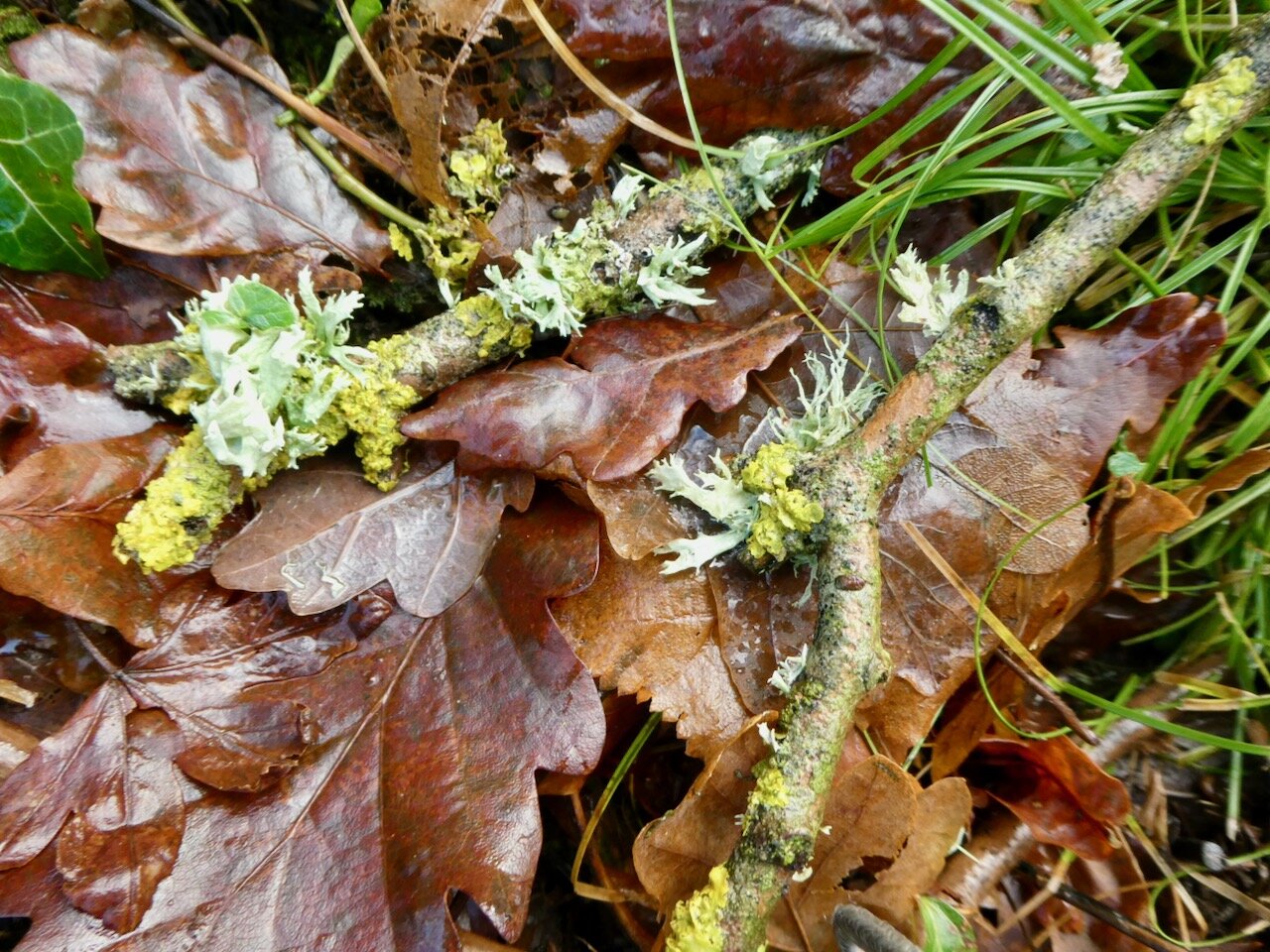
Twigs hosting a combination of lichens
Given the current bounty of lichen it seemed the right time to do a bit more research into the subject. Lichens are very complex and interesting organisms and far more varied than I had appreciated. Lichens sometime appear plant-like but lichens are not plants. They have many growth forms, for example they may have tiny, leafless branches, flat leaf-like structures, flakes that lie on the surface like peeling paint or a powdery appearance. You can find examples of all these types in Dormouse Wood.
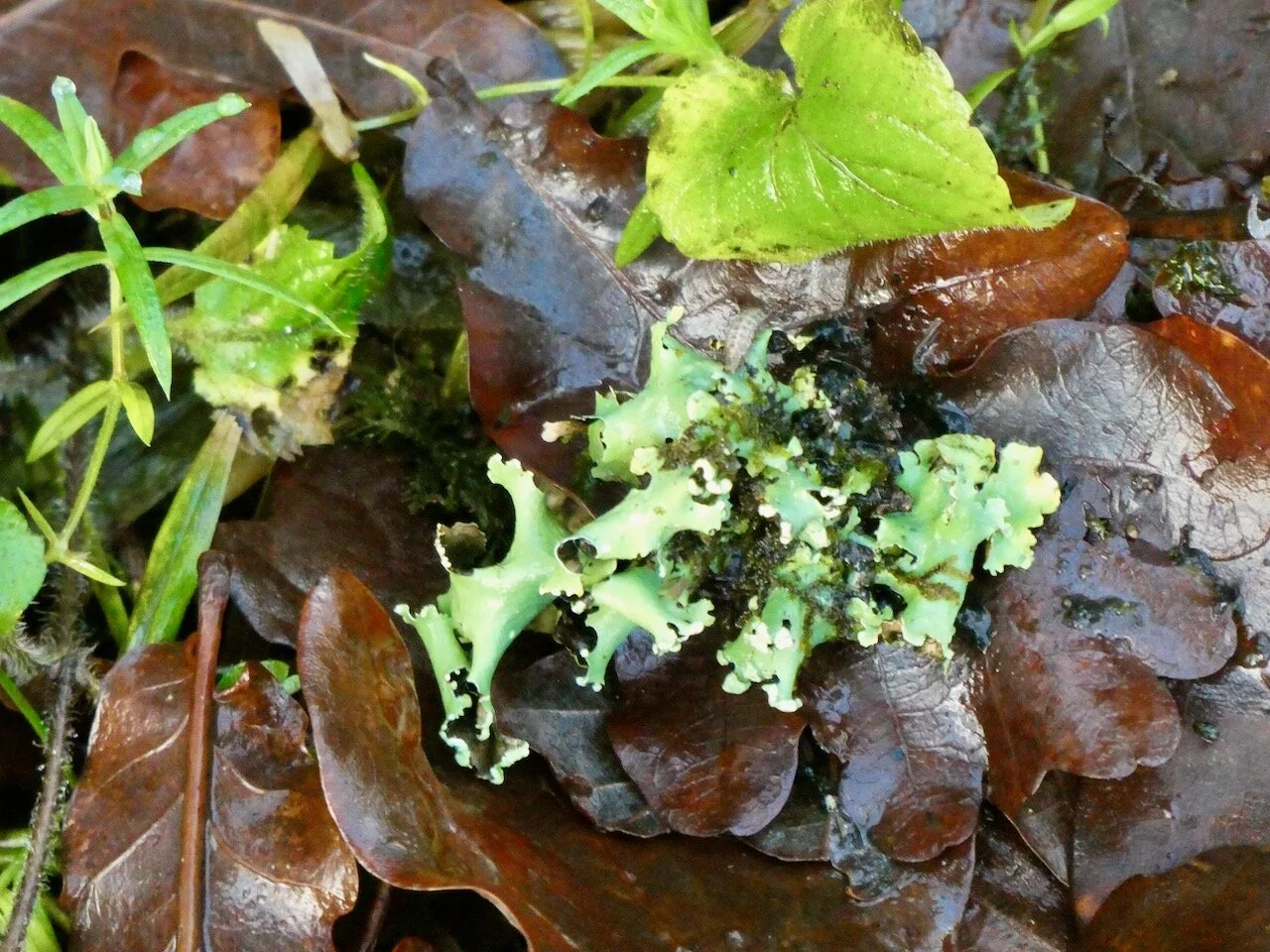
Some of the brilliant green lichen which was originally attached in a mat form to a tree
Pronounced LEYE-ken or (especially in the UK) LICH-en, each type is the result of a close and long-term relationship between different at least two quite different organisms. That relationship always involves a fungus, which lives with one or more partners (e.g. algae and bacteria) at least one of which needs to be able to turn sunlight into food (photosynthesis).
The partner organisms live inside the fungus, and exchange nutrients with it. The resulting lichen is different in shape and mode of life from any of the individual members of the partnership. Together they have become a distinct form of life. Botanists only discovered this around 1875.
Lichens posed a problem for biological classification, because the three types of organism involved come from three different kingdoms. After much debate, lichen are now classified as fungi, under the genus and species of the host fungus.
Lichens live by sticking closely onto surfaces but they simply use these as the base on which to live, they are not parasites. They occur both on land and in water. Lichen is often mat-like, and clings to the surface. Some form little bushes. These tend to be the type I collect as individual pieces, whilst the bark and sticks I harvest from the woodland floor often have several structural types at once. Lichens don’t need a regular supply of water. Their metabolism can go into suspension and later revive.
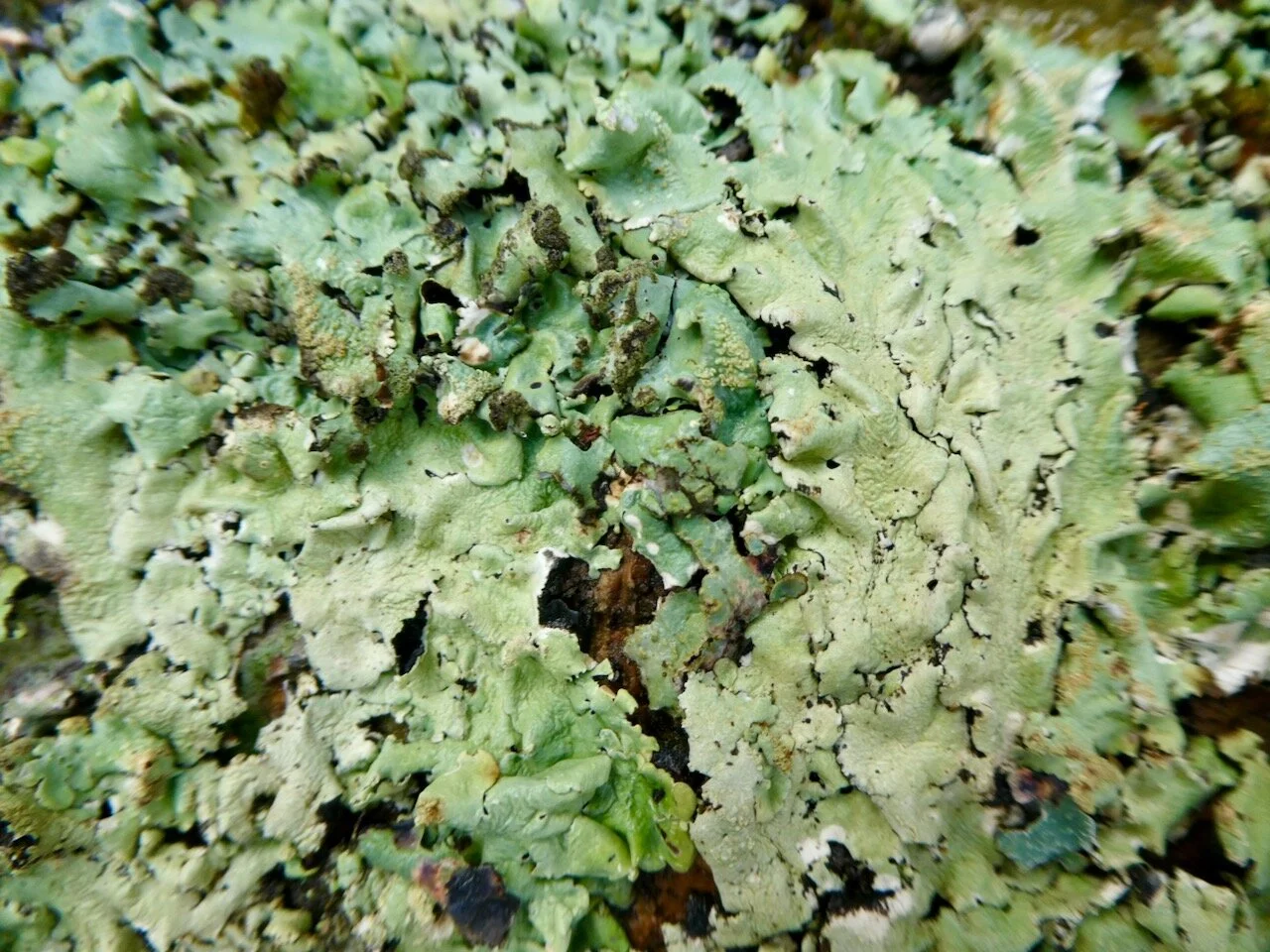
Some of the ‘peeling paint’ type of lichen. There is a massive amount of this on the Dormouse Wood trees
Lichens are relatively self-contained miniature ecosystems. The partners which make up each lichen work together to thrive and adapt.
Lichen are found in some of the most extreme places on Earth, including Antartica, which has about 200 different kinds of lichen, in burning hot deserts and at altitude - they have been found in the Himalayas up to 18,000 feet. Lichen are common on leaves and branches in both rain forests and temperate woods. They can live on bare rock, walls and gravestones, and on exposed soil surfaces.
Lichen can even survive unprotected in space. Two species of lichen were sealed in a capsule and launched into orbit. The capsules were then opened and left exposed to the vacuum of space, to cosmic radiation and extremes of temperature. After 15 days the lichens were retrieved and were found to be completely unharmed.
The fossil record for lichen dates back at last 400 million year and it is likely that forms existed 600 million years ago, making them one of the earliest life forms on land.
Many lichen are sensitive to changes around them and are used to monitor environmental changes such as air pollution. Lichens have also been used to make dyes, and perfumes. There are reports dating back almost 2000 years of red and purple dyes being extracted from lichen, this even includes a food dye with the E number E121. Some lichen produce natural antibiotics that kill bacteria. Humans have used these compounds as natural antibiotics. Lichen extracts species were used to treat wounds in Russia in the mid-twentieth century.
Lichen are the primary winter food for reindeer. Humans can also eat some lichen. A kind named Iwatake in Japanese is collected from cliffs and used in various Japanese and Korean foods. However lichen have a high level of acid and at least two kinds are toxic, so in general eating lichen is not advisable.
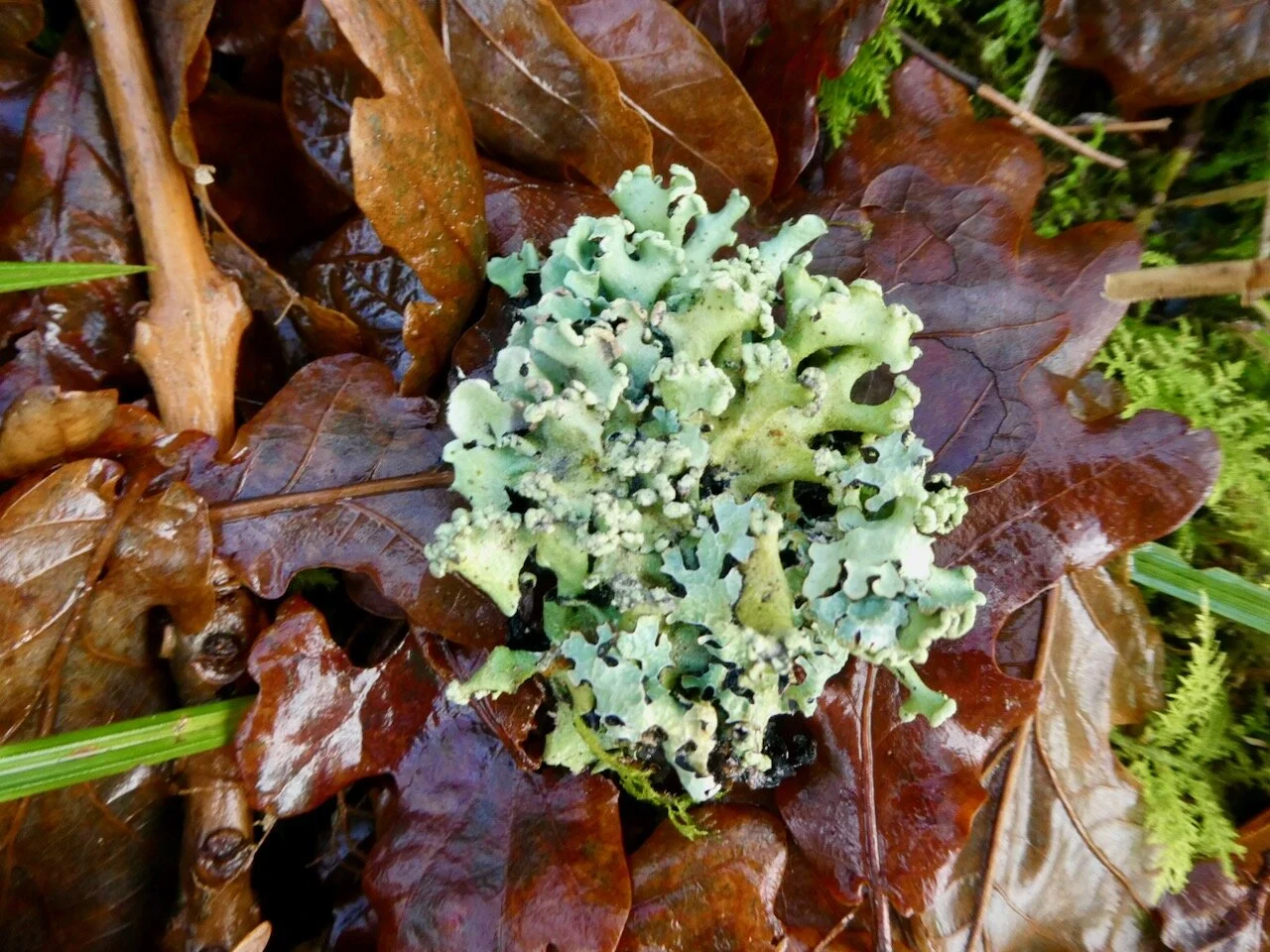
A bush type of lichen
Lichens are among the first organisms things to grow on newly exposed rock, for example after a landslide. The long life-span and slow and regular growth of some lichens can be used to date events, this is called lichenometry.
Having done a little reading it seems that my imagining of lichens as tiny worlds is not quite as fanciful as I thought, even if it is - unsurprisingly - technically incorrect. They are most certainly even more complex than I had realised and I suspect I will be taking time to learn more. In the meantime I am going to take a closer look at my slowly growing lichen collection and perhaps try to sort it into species, although whether I manage to name them is another matter.